Lens · Power & Statecraft
The Runners & Riders
Two Parties. Many Ambitions. And an Unsettled Middle Ground.
The race for the White House in 2028 has yet to be formally joined. But the jockeying has already begun. As Americans prepare for the November 3 midterms, Diplomatique™ takes an early look at the men and women who may seek the presidency, the forces shaping their prospects, and the political territory between the two major parties.
Mark J. Finlay | Editor · No. 3 · 22 October 2026
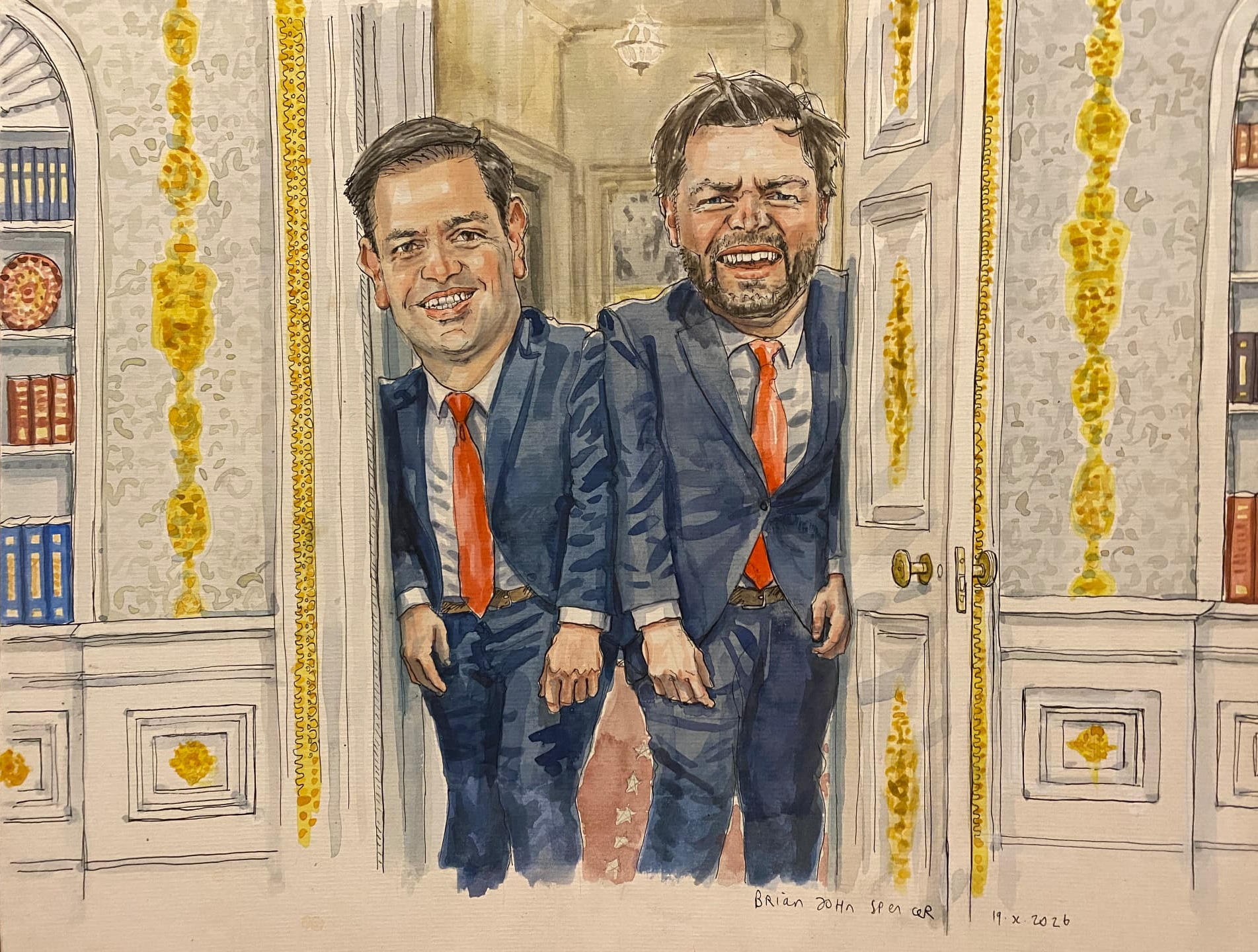
Editorial proof · Supporting evidence and plates under review
The Race Before the Race
In less than two weeks, Americans will go to the polls to elect a new House of Representatives, determine control of the Senate and settle important contests for governor and other state offices.
But we have chosen, quite deliberately, to look beyond November 3.
Why examine the presidential field before the midterms, rather than wait for the results?
Because the outcome of those elections will inevitably change the political calculations for 2028. Some prospective contenders will emerge strengthened, others weakened. New names may enter the conversation. Fundraising, endorsements, alliances and ambitions will shift accordingly.
We want to establish the field before that happens.
Nobody among the principal prospective contenders discussed here has formally declared a candidacy for the 2028 presidency in the reporting considered for this article. No party has selected its nominee. Indeed, some of the individuals we examine may never become candidates at all.
Yet political ambitions rarely begin with formal announcements.
They emerge through speeches, travel, fundraising, relationships, carefully chosen interventions and the cultivation of constituencies far beyond a politician's present office.
On the Republican side, the central question is who might inherit President Trump's political movement—and whether that inheritance would be sufficient to win a national election.
For the Democrats, the challenge is rather different: identifying a candidate capable of uniting a fragmented party while winning back voters who have drifted away from it.
And between them lies an unsettled political middle ground, occupied by millions of Americans who may feel increasingly poorly served by either party.
It is here, too, that we consider the potential significance of former South Carolina Governor David Beasley—a man whose international experience, Christian faith and relationships across political divides make him an intriguing figure, even if his path to the presidency is far from evident.
This is not a prediction of who will win in 2028. It is an examination of who may run, why they might matter, and how the political arithmetic could change.
The runners and riders are assembling.
The starting gate remains some distance away.
I. The Republicans
Who Inherits MAGA?
The Republican starting gate is not yet occupied. But two prospective contenders have already established a substantial presence in the early political conversation.
Vice President JD Vance and Secretary of State Marco Rubio.
Both serve at the heart of President Trump's administration. Both enjoy considerable national recognition. Both have access to political relationships and resources that would be the envy of most prospective presidential candidates.
Yet they represent rather different political propositions.
President Trump is constitutionally barred from seeking another elected presidential term. That does not mean his influence will diminish as the succession contest approaches.
Quite the opposite.
The president remains the dominant personality within the Republican Party. His preferences, endorsements and judgments could exert enormous influence over the eventual nomination.
But there is a fundamental distinction between inheriting the loyalty of President Trump's supporters and persuading the wider American electorate to elect his successor.
The candidate best equipped to win the Republican nomination may not necessarily be the candidate best equipped to win the presidency.
That is the central calculation confronting the party.
JD Vance — The Early Favourite
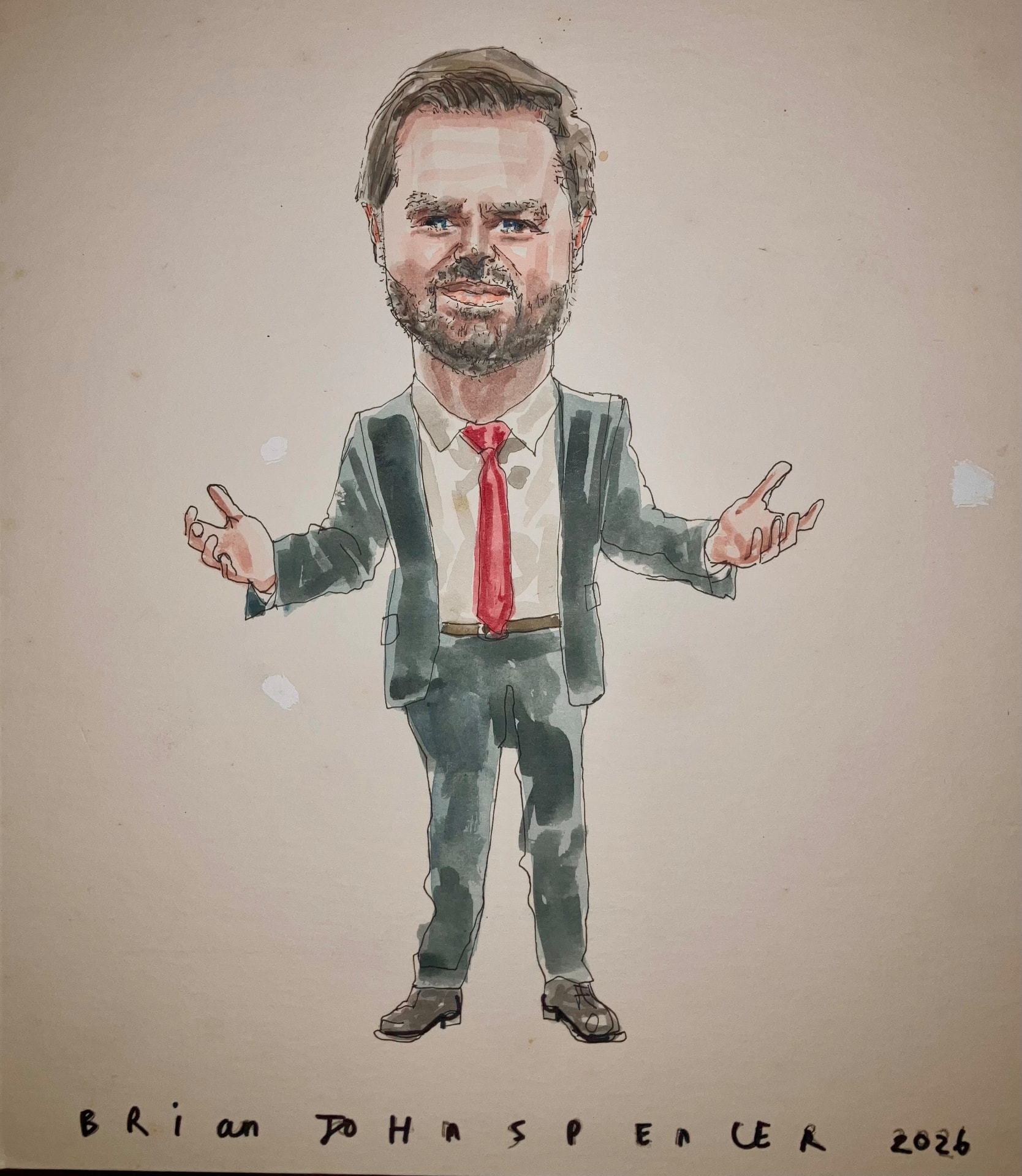
Vice President Vance begins with the institutional advantages of the office he holds.
He is the sitting vice president, closely identified with President Trump's political movement, and an increasingly prominent figure in both domestic and foreign policy.
His journey from a troubled childhood in Ohio to the United States Senate and then the vice presidency is a compelling American story.
His bestselling memoir, Hillbilly Elegy, introduced him to a national audience well before he entered electoral politics. It also established his credentials as an interpreter of the social and economic dislocation experienced by communities that had once been central to American manufacturing.
Vance understands the grievances that helped carry President Trump to the White House. He has also developed an intellectual and political framework around questions of industrial policy, economic nationalism, immigration and America's international commitments.
His early prominence is measurable.
Republican presidential preference polling in early October placed Vance ahead of the other prospective contenders.
But polling conducted two years before a presidential election is not a reliable prediction of the eventual result. It measures recognition, enthusiasm and present preferences among a field that may change considerably.
Vance's challenge will include distinguishing himself from the administration he serves.
He will have to demonstrate that he offers not merely continuity but a credible programme for the next decade.
He must also address the consequences of decisions made during President Trump's second term, including those in which he has had a prominent role.
The vice presidency provides an excellent vantage point from which to approach the starting gate.
It does not guarantee a successful finish.
Marco Rubio — The Statesman, the Orator and the Acropolis
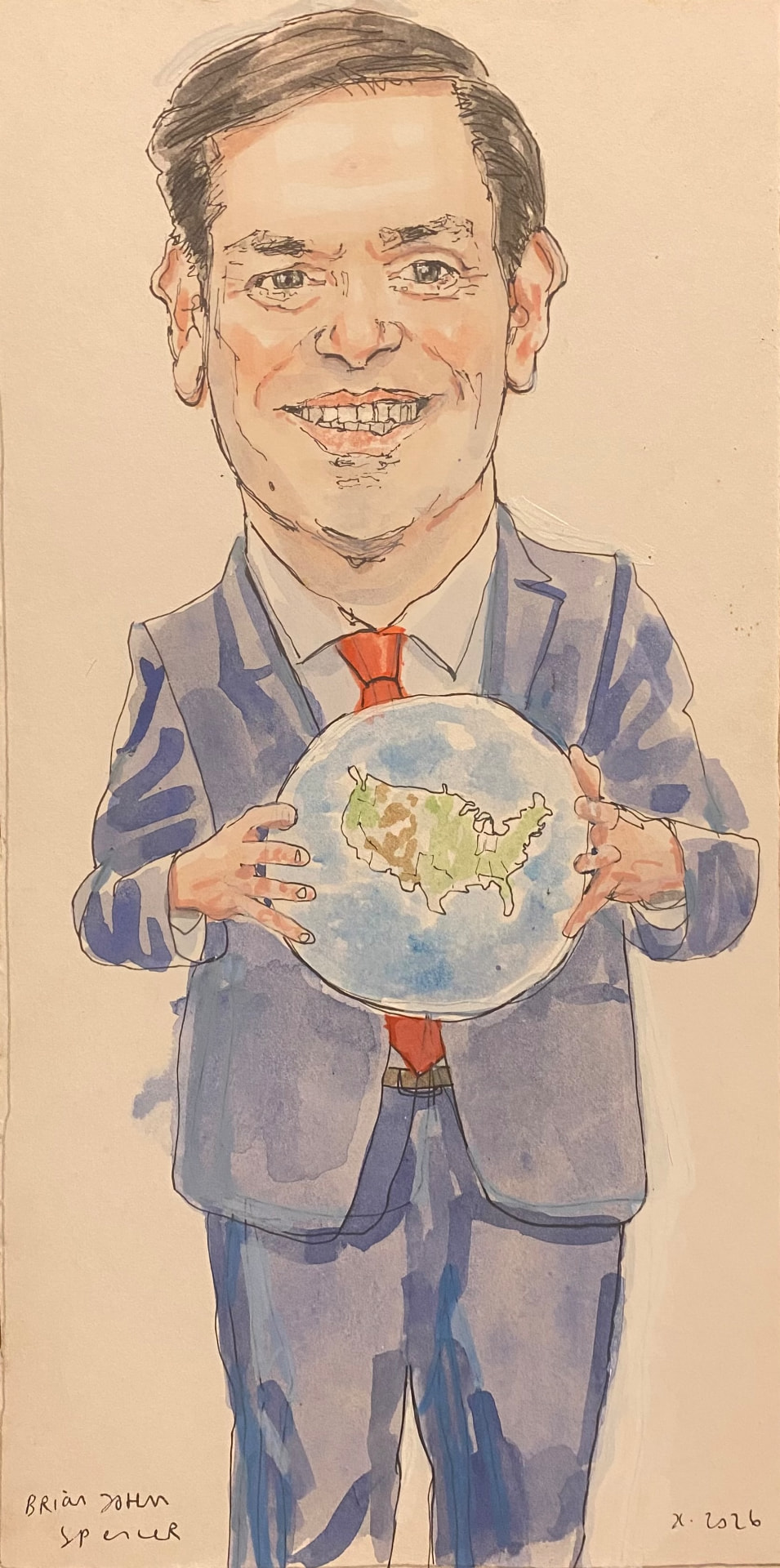
Secretary of State Marco Rubio presents a different picture.
A former Speaker of the Florida House of Representatives and a three-term United States senator, Rubio has spent much of his political career at the intersection of domestic policy, national security and America's relationships with the wider world.
He has longstanding relationships on Capitol Hill and considerable familiarity with the legislative process.
His experience includes China, Latin America, Russia, NATO and the institutions through which the United States exercises influence abroad.
His appointment as Secretary of State placed him in a position that few contemporary American politicians can match.
But it is Rubio's recent public articulation of America's place in the world that has brought a new dimension to speculation about his political future.
On February 14, 2026, addressing the Munich Security Conference, Rubio delivered a substantial statement on the historic bonds between the United States and Europe, the shared inheritance of Western civilization, and the strategic challenges confronting the transatlantic alliance.
The address followed Vice President Vance's much-discussed intervention at the same conference a year earlier.
Where Vance had challenged European political leaders directly on matters of democracy, freedom of expression and political legitimacy, Rubio offered a broader historical argument about the foundations of the Western alliance and the responsibilities of its members.
The distinction was noteworthy.
Rubio did not suggest that Europe should abandon its national identities or that America should subordinate its interests to international institutions.
Rather, he argued that the alliance would be strengthened by renewed confidence in its shared cultural inheritance, national sovereignty and capacity to defend itself.
The speech demonstrated Rubio's ability to connect history, political philosophy and contemporary strategic concerns within a coherent public argument.
Then came Athens.
On October 7, standing at the ancient Pnyx, where Athenians once gathered to exercise their democracy, with the Acropolis and Parthenon rising behind him, Rubio delivered an address that attracted attention beyond the diplomatic community.
The setting was extraordinary.
Here, in the birthplace of Athenian democracy, the questions of political authority, justice and good government have occupied Western thought for more than two millennia.
It was in Athens, during the generations that followed the flowering of its democracy, that Plato wrote The Republic—one of the foundational Great Books of Western civilization.
Through the conversations of Socrates, Plato examined the meaning of justice, the ordering of society and, above all, the character and wisdom required of those entrusted with power.
His famous proposition that rulers should possess the wisdom of philosophers was not an endorsement of democracy as Athens practised it. Indeed, The Republic challenged many of its assumptions.
But Plato's questions have endured long after the institutions of ancient Athens disappeared.
What makes a society just? What qualifies a person to govern? And should political power be pursued for its own sake—or exercised in service of something greater?
Standing before the Acropolis, Rubio was speaking in a place where those questions were hardly new.
As evening descended over Athens, he reached back more than two millennia to examine the inheritance of ancient Greece, the development of Western civilization and the relationship between national ambition, sovereignty and political power.
He spoke of the Greeks' influence upon America's founding institutions, of Rome and European Christendom, and of the character and determination required to sustain a civilization.
He connected that historical account to the realities of contemporary international relations: the return of great-power competition, the demands of national security, the vulnerability of industrial and technological supply chains, and the need for Western nations to rediscover confidence in their own capacities.
It was a speech notable not simply for its subject, but for its construction and delivery.
Rubio demonstrated an evident command of his material, moving between classical history, political ideas and current strategic concerns without losing the thread of his argument.
Whether one accepts his interpretation of Western history or disputes elements of his political philosophy, the address deserves serious consideration.
It also demonstrated the rhetorical skills that would become consequential were Rubio eventually to seek the presidency.
Indeed, some commentators interpreted the Athens address as something approaching an unofficial declaration of presidential ambition.
On October 8, The American Spectator went so far as to describe it as the first speech of the 2028 presidential race.
Others saw in the address a carefully framed attempt to connect President Trump's America First programme to a wider philosophical account of Western identity and national purpose.
That interpretation has prompted debate.
Supporters regard Rubio's argument as a defence of Western civilization, sovereignty and the importance of national confidence. Critics question whether his emphasis on power, cultural inheritance and national identity gives sufficient weight to the traditions of individual liberty, universal rights and democratic self-correction that also emerged from the Western experience.
These are substantial questions, not merely differences of political presentation.
They concern the purposes for which national power is exercised, the responsibilities of alliances and the relationship between national interests and the international order.
In that sense, the questions raised by Plato in The Republic have lost none of their relevance.
For Rubio, they may also provide the foundation of a recognisable political identity beyond his service in the present administration.
Munich established the argument. Athens carried it onto a larger stage.
Neither speech constituted a declaration of candidacy.
But taken together, they offer a substantial public expression of the philosophy Rubio might bring to a future presidential campaign.
His oratory is plainly an asset. So, too, is his experience of international affairs and his willingness to engage with their historical and political complexities.
Whether these qualities would translate into support among Republican primary voters is another question.
Indeed, Rubio's position within the party has changed considerably since he first sought its presidential nomination in 2016.
The secretary now bears responsibility for advancing President Trump's foreign-policy priorities, some of which challenge longstanding Republican assumptions about alliances, trade and America's international obligations.
The distance between Rubio and the MAGA movement may therefore be considerably narrower than some observers imagine.
And there remains another possibility.
President Trump has spoken favourably of both Vance and Rubio, and speculation about a joint ticket persists.
For the moment, they need not be rivals.
But should both eventually seek the nomination, the contrast between their political experiences, international outlooks and approaches to public communication would be one of the more interesting dimensions of the contest.
Rubio's speeches at Munich and Athens suggest that, should he choose to enter the race, he would have no shortage of material with which to make his case.
The question is whether he intends to do so.
Donald Trump Jr. — The Family Standard
Donald Trump Jr. has never held elected office.
In ordinary circumstances, that might place him at a considerable disadvantage against a sitting vice president, a secretary of state and several experienced governors.
But these are not ordinary circumstances.
The Trump name is more than a family association. It has become a political identity, a fundraising force and, for millions of Americans, a symbol of opposition to the country's established political institutions.
Donald Trump Jr. has built substantial relationships within that movement.
Early polling has placed him among the better-known figures in the prospective Republican field, although behind Vance and Rubio.
The question is whether Republican voters would wish to perpetuate the Trump political dynasty—or prefer a successor capable of carrying its principles forward without the family name.
There is also a distinction between political influence and presidential ambition.
Donald Trump Jr. might prove consequential as a supporter, fundraiser and political organizer rather than as a candidate.
Until his intentions become clearer, his role in the succession conversation remains open.
Ron DeSantis — The Second Attempt
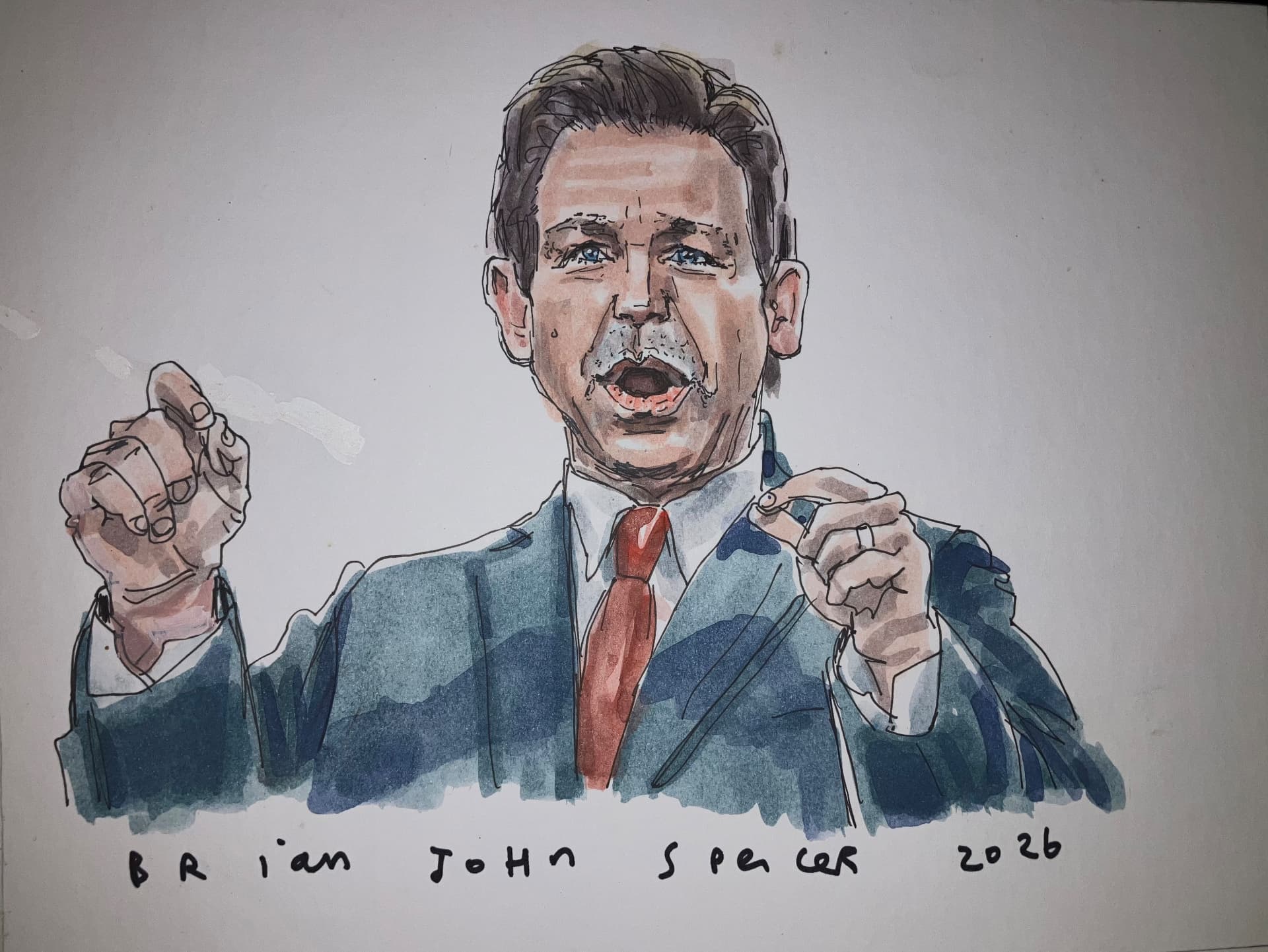
Florida Governor Ron DeSantis has already discovered how unforgiving a Republican presidential primary can be.
His campaign for the 2024 nomination began with considerable expectations but failed to dislodge President Trump.
The experience exposed the difficulty of offering Republican voters a more disciplined version of the same political message while the movement's founder remained in the race.
By 2028, however, the circumstances will be different.
DeSantis will have completed his governorship, leaving him free to build a national political organization without the immediate demands of executive office.
His record in Florida provides substantial material for a campaign focused on conservative governance, taxation, education, regulation and the relationship between state and federal authority.
But he would confront two questions.
First, how would he distinguish his political programme from that of Vance and other figures identified with the current administration?
Second, could he demonstrate that his previous defeat was principally a consequence of the political circumstances of 2024 rather than a limitation in his national appeal?
There are second acts in American presidential politics.
They are simply harder to arrange than candidates sometimes imagine.
Glenn Youngkin — Head and Shoulders Above?
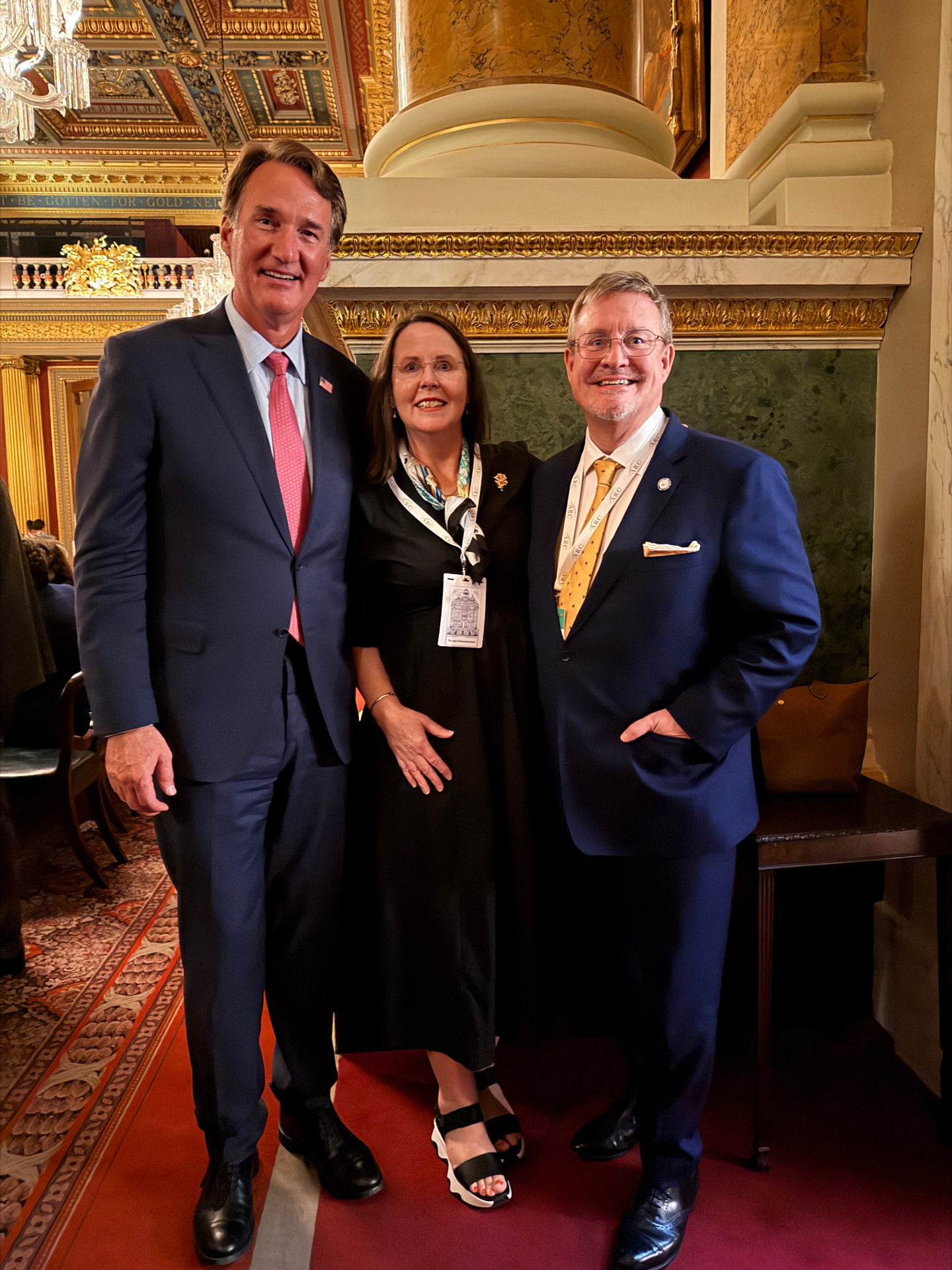
Among the current and former governors who might enter the Republican presidential contest in 2028, Glenn Youngkin deserves particular attention.
There is something about Youngkin’s physical presence that photographs convey more readily than words. Tall, assured and comfortable in his own skin, he possesses the bearing that Americans have often associated with presidential leadership.
But stature is about rather more than height.
Youngkin came to politics from the world of business, having served as co-chief executive of the Carlyle Group, before winning the governorship of Virginia in 2021. His victory demonstrated an ability to reach voters beyond the Republican Party’s most committed supporters, while retaining much of the conservative coalition. Education, parental rights and the responsibilities of government to families were central to that campaign.
He governed Virginia from January 2022 until January 2026, pursuing tax reductions, economic investment, education reform and regulatory changes, while confronting a legislature in which Democrats exercised significant influence for much of his tenure. That combination of business experience, executive responsibility and electoral appeal makes him an intriguing prospect for 2028.
Youngkin has not declared a 2028 candidacy and has previously indicated that he does not plan to run. His continuing national activities should not be mistaken for a declaration.
In August 2026, he launched Empowering America's Parents, promoting education choice and a federal scholarship tax credit across multiple states. He has also campaigned for Republicans outside Virginia; September reporting disclosed a $100,000 contribution from his nonprofit organization to One Nation, a conservative group associated with Republican Senate electoral efforts. These are concrete activities, whatever conclusions observers may draw about their ultimate purpose.
His political identity remains rooted in business leadership and executive government at state level. He supported President Trump in 2024, but his career has not depended entirely upon membership of the MAGA movement. Could the next Republican nominee retain its supporters while assembling a broader electoral coalition? Virginia offers one example, not proof that the same approach would succeed in a presidential primary.
Yet appearances can deceive. When Samuel was sent to anoint Israel’s future king, he was reminded: “For the LORD sees not as man sees: man looks on the outward appearance, but the LORD looks on the heart.” — 1 Samuel 16:7 (ESV).
A useful caution for political observers, not least those tempted to confuse presidential bearing with presidential character.
Youngkin may stand head and shoulders above many of his prospective rivals. Whether he possesses the political judgement, conviction and appetite to lead them is a more important question.
Nikki Haley — A Changing South Carolina Calculation
Former South Carolina Governor Nikki Haley occupies a different position in the emerging Republican field.
She served as United States Ambassador to the United Nations during President Trump's first administration and subsequently challenged him for the Republican presidential nomination in 2024.
Her campaign attracted support among Republicans seeking an alternative to President Trump's leadership, particularly among traditional conservatives and voters dissatisfied with the party's direction.
But her challenge did not displace President Trump, and there is little public evidence of a substantial movement within MAGA seeking to establish Haley as his political successor.
There is another consideration that deserves attention.
Haley is not the only former South Carolina governor whose name belongs in a discussion of the political future.
David Beasley, who governed the state from 1995 to 1999, has begun an increasingly visible national effort to bring Americans together across their political, cultural and religious differences.
His Breaking Bread Together initiative encourages people who disagree to sit down, share a meal, listen to one another and rediscover common ground.
Beasley's national outreach raises an intriguing question about whether this reconciliation effort might also provide the foundations for a more explicitly political undertaking.
It has some of the characteristics observers examine when assessing early presidential ambitions: a national message, public appearances, the cultivation of relationships and an attempt to engage Americans beyond established party boundaries.
But civic outreach and presidential campaigning are not the same thing.
The relationship between these two former South Carolina governors also merits consideration.
Both have served as Republican governors. Both have international experience and relationships extending well beyond their home state. Both retain connections within South Carolina's political community.
Would Haley contemplate another presidential campaign if Beasley were to enter the field?
Might she instead choose to lend her influence to a former governor pursuing an appeal to the political centre?
Or would their distinct constituencies and ambitions lead them in separate directions?
There is no public evidence establishing how Haley would answer those questions, and her decisions should not be presumed.
We return to Beasley in our examination of The Unclaimed Centre, where his international experience, faith-based relationships and emerging national outreach deserve fuller consideration.
The Other Horses in the Paddock
The prospective field extends beyond those examined in detail.
Georgia Governor Brian Kemp has maintained considerable political influence despite periods of disagreement with President Trump.
Senator Ted Cruz retains a national conservative following and the experience of a previous presidential campaign.
Health and Human Services Secretary Robert F. Kennedy Jr. occupies a particularly unusual position. His political history crosses party boundaries, and his views on public health and government institutions have attracted both devoted supporters and substantial criticism.
And Vivek Ramaswamy, currently seeking the Ohio governorship, represents a younger generation of conservative leadership. His immediate electoral task may shape the direction of any subsequent national ambitions.
These individuals do not begin on equal terms.
Indeed, most may never declare.
But a political field that appears settled two years before an election has a remarkable capacity to rearrange itself.
What the Midterms Will Tell Us
The November elections will provide the first substantial evidence about the political conditions the eventual Republican nominee may inherit.
Will Republican voters turn out in sufficient numbers without President Trump's name on the ballot?
Will the party retain its foothold among working-class voters while recovering support in the suburbs?
Will economic concerns outweigh arguments about immigration, national security and cultural identity?
And what happens if Republicans lose control of the House—or the Senate?
The answers will matter to every prospective candidate.
For Vance, the result may strengthen or complicate the argument for continuity.
For Rubio, it may help determine how his international experience and emerging public philosophy fit the party's changing political priorities.
For Youngkin, the result may help illuminate the wider relevance of the suburban and family-centred approach associated with his Virginia victory.
For DeSantis, Haley and others, the result could shape discussions about whether the party should maintain its present direction or reconsider elements of its approach.
But one distinction should remain clear.
President Trump may be able to influence who wins the Republican nomination. The American electorate will decide whether that person becomes president.
Those are two very different contests.
And the distance between them may prove decisive.
II. The Democrats
A Crowded Field — And a Contest Over the Political Centre
If the Republicans are preparing for a succession, the Democrats face a rather different problem.
They must decide what sort of party they wish to become—and which political approach can restore their fortunes after the presidential defeat of 2024.
Some believe the answer lies in recovering the working-class voters who once formed the backbone of Democratic electoral success. Others argue that Democrats must mobilize younger voters and become more forceful in advancing progressive policies.
Still others believe the party's challenge is less ideological than practical: convincing Americans that Democrats can govern competently, make everyday life more affordable and restore confidence in public institutions.
All three arguments contain elements of truth.
For now, California Governor Gavin Newsom is among the most visible prospective contenders.
But the Democratic Party has another question to consider.
Could a candidate whose political experience has been forged in Republican-leaning territory offer a different approach to national leadership?
Kentucky Governor Andy Beshear and former North Carolina Governor Roy Cooper bring that possibility into focus.
Their experience is different from Newsom's. So, too, are the political constituencies they have learned to address.
And the November 3 midterms may provide important evidence about the arguments each represents.
The Donors Are Asking Questions Too
Behind the public manoeuvring, another conversation is taking place.
In discussions with significant Democratic Party donors, I have encountered a growing concern about the need for clarity—not simply over who might lead the party in 2028, but over the programme that leadership would represent.
Their immediate attention is understandably fixed upon the midterms.
They hope that November 3 will deliver a Democratic majority in the House of Representatives, giving the party an opportunity to move beyond opposition to President Trump and begin articulating a coherent alternative programme for the country.
But winning control of the House would be only the beginning.
A Democratic majority would have to demonstrate that it could develop an agenda, establish priorities and communicate them in terms that resonate beyond the party's established constituencies.
And it would have to do so while confronting an administration with no apparent intention of surrendering the political initiative.
A wounded administration under President Trump would not necessarily retreat. It might instead accelerate.
Should Democrats capture the House, President Trump would retain the presidency, control of the executive branch and the considerable powers of his office for another two years.
Deprived of a cooperative House, the White House could respond with an intensified barrage of executive orders, presidential memoranda, administrative directives and regulatory action—using every available instrument of executive authority to advance its programme.
The existing stream of presidential directives could become a torrent.
And the greater the obstacles encountered on Capitol Hill, the stronger the temptation to pursue policy through executive action rather than congressional legislation.
At the opposite end of Pennsylvania Avenue, a Democratic House would have its own weapons: committee investigations, subpoenas, appropriations negotiations, legislative initiatives and the power to summon administration officials to account for their decisions.
The confrontation could be relentless.
But the battle would not be confined to Pennsylvania Avenue.
It would spill into the federal courts, where arguments over executive authority, statutory interpretation, administrative procedure and constitutional limits would become another theatre of the struggle between the branches of government.
District courts would confront challenges to presidential and administrative action. Courts of appeals would review disputed rulings. And questions of sufficient legal or constitutional significance could ultimately reach the Supreme Court of the United States.
SCOTUS could once again find itself at the centre of arguments about the separation of powers and the boundaries of presidential authority.
The courts, of course, are not another political opposition party. Their responsibility is to adjudicate disputes according to law. Nor can executive orders override statutes or the Constitution.
But that will hardly prevent political actors on both sides from treating consequential judicial rulings as victories or defeats in the broader national contest.
The legislature would legislate, investigate and obstruct where its lawful powers permit. The executive would direct, regulate and defend. The litigants would sue. And the courts would be asked to determine where authority begins and ends.
Meanwhile, along K Street, Washington's lawyers, lobbyists, consultants and government-relations specialists would find no shortage of clients seeking advice, influence, protection or advantage.
For businesses, investors, state governments, universities, charities and international partners, the consequences could be substantial.
An executive order issued on Monday might prompt a legal challenge on Tuesday, a congressional hearing the following week and months of uncertainty about whether the policy would survive.
The regulatory environment could become increasingly difficult to navigate. Businesses would have to assess not merely what the rules say, but whether those rules might be challenged, suspended, rewritten or overturned.
And the airwaves?
They would be alight.
Every presidential directive, congressional investigation, judicial injunction and Supreme Court ruling would be subjected to competing interpretations across television, radio, podcasts and social media.
The political confrontation would become a daily spectacle, with the opening stages of the 2028 presidential contest unfolding against its backdrop.
Even if Republicans retain control of Congress, the administration will still face the pressures of a presidency approaching its final two years, an increasingly active succession debate and continuing legal and political challenges.
Either way, the coming period promises little respite for Washington.
For the lawyers and lobbyists of K Street, it could prove exceptionally lucrative. For Americans seeking stable and predictable government, the consequences may be less welcome.
And that brings us back to the Democratic donors.
The concerns expressed to me extend to the presidential field.
There is little appetite among these donors for a prolonged period of confusion in which competing personalities, factions and ambitions obscure the larger question of what Democrats intend to offer the American people.
They are looking for coherence: a credible programme, a recognisable national message and a prospective presidential candidate capable of giving both direction.
This is not to suggest that the party's donors speak with one voice, nor that presidential nominees should be selected in private conversations among those who finance campaigns.
Ultimately, Democratic primary voters will make that decision.
But those who have invested substantially in the party's electoral efforts are already considering the relationship between the next Congress and the presidential contest that follows.
Can a newly elected Democratic House, should voters give the party control, help establish a governing agenda around which the eventual presidential nominee can build a national campaign?
And can the party develop that agenda without allowing the contest between its moderate and progressive wings to overwhelm the message?
These questions help explain why the emerging presidential field deserves examination before the midterms.
They also provide a useful framework through which to consider Gavin Newsom, Andy Beshear, Roy Cooper and the other prospective contenders.
For the Democrats, the challenge is not simply to identify a candidate.
It is to decide what that candidate is being asked to lead.
Gavin Newsom — The California Proposition
Governor Gavin Newsom has spent much of 2026 increasing his national visibility, supporting Democratic candidates and positioning himself in opposition to President Trump's administration.
His California governorship gives him an extensive record in economic development, public policy and executive leadership.
His state is home to some of the world's largest technology companies, major ports, universities and international investment networks.
It is also associated with formidable challenges involving housing affordability, homelessness, taxation and public spending.
A presidential campaign would bring both sides of that record under scrutiny.
Newsom's communication style is confrontational, his fundraising relationships are substantial, and his willingness to engage Republicans directly has attracted national attention.
Yet a Democratic presidential nominee must do more than command attention among voters already opposed to President Trump.
The candidate must develop a programme capable of addressing Americans whose economic and political circumstances bear little resemblance to those of California.
That brings two governors from the Southeast into the conversation.
Andy Beshear — Faith, Family and the Rural Heartland
Kentucky Governor Andy Beshear offers a different account of Democratic political leadership.
He has twice been elected governor in a state whose voters have repeatedly supported Republican presidential candidates.
His approach combines practical government, economic development, healthcare and a willingness to speak openly about Christian faith and family life.
In communities where national Democratic messages have often struggled to find an audience, Beshear has developed relationships that cross party boundaries.
His role as chair of the Democratic Governors Association has also brought him into campaigns beyond Kentucky, including states where Democrats face difficult electoral conditions.
This experience raises a question for 2028.
Could the party develop a national programme capable of engaging the rural communities and smaller industrial towns where it has lost ground?
Beshear's record is relevant to that debate.
But another figure introduces a complication to the political arithmetic.
Former South Carolina Governor David Beasley, whose national Breaking Bread Together initiative is seeking common ground across political and cultural divides, addresses some of the same communities and values that feature in Beshear's political approach.
Both men speak openly about faith. Both have experience in states where Republican presidential candidates enjoy substantial support. Both place personal relationships and engagement across disagreement near the centre of their public message.
They are not pursuing identical political programmes, and Beasley has not declared a presidential candidacy.
Nevertheless, if Beasley's initiative were to develop into an independent presidential effort, how much overlap might exist between the constituencies he attracts and those a national Beshear campaign would seek to engage?
That question cannot presently be answered with polling.
But it illustrates why an independent candidacy appealing to faith communities, rural voters and political moderates could complicate the calculations of either major party.
We return to Beasley in The Unclaimed Centre.
Roy Cooper — The North Carolina Test
Former North Carolina Governor Roy Cooper faces a rather different examination.
He is not campaigning for president.
He is campaigning for the United States Senate against Republican Michael Whatley.
But the outcome of that contest may influence the national Democratic conversation.
North Carolina has repeatedly supported President Trump in presidential elections while also electing Cooper to two terms as governor.
His political experience therefore provides a case study in Democratic electoral success in a state where national Republican candidates have remained competitive.
Cooper's Senate campaign has concentrated on affordability, healthcare and practical government.
His record of negotiating Medicaid expansion with a Republican-controlled legislature gives him a concrete example of governing across party boundaries.
And North Carolina's changing political character makes the contest particularly instructive.
The state contains growing metropolitan and suburban communities, substantial university and technology centres, established military interests, agricultural regions and smaller towns where economic and cultural concerns differ considerably.
It is increasingly competitive in statewide elections, although presidential voting has remained Republican.
Polling during October has shown Cooper leading Whatley, but the strength of that lead varies with the poll and aggregation method.
North Carolina Senate polling — RealClearPolling
If Cooper wins on November 3, what will the result tell us about the political coalition he has assembled?
His margin of victory, geographic distribution of support and performance among unaffiliated voters will all merit close examination.
A victory would not constitute a declaration of presidential ambition.
Indeed, Cooper would enter the Senate in January 2027 with a six-year mandate from North Carolina's voters.
Whether he would wish to pursue another office so quickly is uncertain.
But his performance could become an important point of reference for Democrats debating how to appeal beyond their established constituencies.
And if the result is significantly closer than present polling suggests, that too would require explanation.
For Cooper, the immediate race is for the Senate.
For the Democratic Party, the implications could extend considerably further.
Kamala Harris — The Unfinished Campaign
Former Vice President Kamala Harris retains national recognition, substantial political relationships and considerable influence within the Democratic Party.
She also carries the experience of defeat in the 2024 presidential election.
That creates a difficult calculation.
Her supporters can point to the extraordinary circumstances of her previous campaign, including the limited time available following President Biden's withdrawal.
Others within the party question whether a second Harris candidacy would help Democrats establish a new political direction.
Recent reporting has indicated that some former aides and supporters doubt she will ultimately pursue another nomination.
But Harris herself has not closed the door.
Her continued involvement in the 2026 midterm campaigns could be consistent with preparing for another presidential effort, maintaining political influence or both.
There is also the question of what role leading Democrats might encourage her to play after November.
Some may favour another candidacy. Others may seek her support in developing a new generation of Democratic leadership.
For now, it would be premature to treat either outcome as settled.
Her eventual decision could substantially change the composition of the Democratic field.
Alexandria Ocasio-Cortez — The Progressive Standard
Representative Alexandria Ocasio-Cortez represents a different political tradition within the Democratic Party.
She has become one of its most recognisable progressive voices, particularly among younger voters and those seeking substantial changes in economic and social policy.
Her national profile, media presence and political relationships give her influence extending well beyond her New York congressional district.
Should she seek the presidential nomination, she would bring an identifiable progressive programme into the contest.
But the November midterms offer an earlier opportunity to examine the political movement with which she is associated.
How will candidates backed by progressive organizations perform in competitive districts and statewide races?
Will they increase turnout among younger voters?
Will their economic arguments resonate in communities concerned about wages, housing, healthcare and the cost of living?
And can progressive candidates establish support beyond districts already inclined to elect Democrats?
The evidence may be mixed.
Some Democratic candidates in competitive constituencies have been reluctant to associate their campaigns publicly with Ocasio-Cortez, reflecting disagreements within the party about the electoral implications of her political positions.
Yet progressive candidates and organizations are continuing to pursue opportunities in the midterms.
The results will provide evidence not simply about Ocasio-Cortez personally, but about the direction and reach of the wider progressive movement.
Whether that movement ultimately coalesces around her, another prospective candidate or several competing figures remains open.
The important question is how its ideas and electoral organization develop between November 2026 and the presidential primaries.
Josh Shapiro — The Pennsylvania Proposition
Pennsylvania Governor Josh Shapiro represents another approach to Democratic political leadership.
Pennsylvania occupies a central position in the arithmetic of presidential elections.
Shapiro has demonstrated an ability to win statewide support in a competitive political environment, combining executive experience with an accessible public manner.
His supporters argue that his record offers a model for Democratic candidates seeking to appeal across traditional political boundaries.
There are complications.
Shapiro's strong support for Israel and his positions on contentious domestic issues have attracted criticism from parts of the Democratic left.
A presidential primary could expose those disagreements.
But Pennsylvania will remain central to the national political conversation, and Shapiro's record will inevitably attract attention.
Gretchen Whitmer — The Industrial Midwest
Michigan Governor Gretchen Whitmer understands the political importance of manufacturing, organized labour and communities whose economic fortunes have been transformed by globalization.
Michigan is one of the great battlegrounds of American politics.
Whitmer's experience governing the state gives her a record around jobs, infrastructure, industrial policy and the economic concerns of working families.
Her political approach raises questions about how Democrats might engage voters attracted by President Trump's promises to rebuild American manufacturing.
Yet a successful record in state office does not automatically translate into a national campaign.
Whether Whitmer wishes to undertake that campaign remains open.
JB Pritzker — Money, Machinery and Political Resolve
Illinois Governor JB Pritzker possesses political resources that relatively few prospective candidates can match.
His personal wealth provides considerable freedom from the early fundraising constraints faced by other candidates.
But his political significance should not be reduced to his financial position.
Pritzker has developed a forceful national profile, confronting the administration while seeking to expand Democratic organization beyond the party's strongest urban constituencies.
His challenge would include demonstrating how his governing experience and economic programme address the concerns of voters outside Illinois.
Money can finance an extensive campaign.
It cannot answer every question about the direction a candidate wishes to take the country.
Pete Buttigieg — The Articulate Campaigner
Former Transportation Secretary Pete Buttigieg remains one of the Democratic Party's most recognisable communicators.
His unsuccessful campaign for the 2020 nomination introduced him to a national audience and demonstrated his ability to compete against politicians possessing greater experience in national office.
His service in the Biden administration, military background and experience as mayor of South Bend give him a varied public biography.
Supporters point to his ability to explain complex policies and engage audiences that Democrats have sometimes struggled to reach.
Critics question whether his executive and administrative experience provides sufficient preparation for the presidency.
There is also a generational argument.
Buttigieg would offer a contrast with the older political figures who have dominated recent presidential elections.
Whether he seeks to develop that argument into another candidacy remains to be seen.
Wes Moore — A Different Generation of Leadership
Maryland Governor Wes Moore has attracted attention as a possible future national leader.
A military veteran, author and former charitable-sector executive, Moore brings an experience of public service that differs from the conventional political career.
His personal story allows him to address questions of opportunity, responsibility and national purpose.
But experience also matters.
Moore has served as governor only since January 2023. His national ambitions, if they develop, will be assessed against a relatively short record in elected office.
For now, his significance lies partly in what he may represent to the Democratic Party's next generation.
Rahm Emanuel — The Renewal Argument
Few prospective contenders bring a more varied institutional record. Rahm Emanuel served three terms as a Democratic congressman from Illinois, stood at President Obama's side as White House chief of staff, governed America's third-largest city as mayor of Chicago for two terms, and most recently represented the United States as ambassador to Japan.
He is publicly considering a campaign for the 2028 Democratic presidential nomination. He has not declared one. CBS Chicago reported on 8 October 2026 that he will make his decision after the midterm elections.
The groundwork, however, is visible. The Associated Press documented his 'Spin-Free' cycling tour through New Hampshire in June 2026, with visits and policy themes that tested the waters of the first primary state. WBUR reported his own comments on considering a bid in May.
His argument is distinctive. Axios reported in January 2026 his case for a 'renewal wing' of the Democratic Party: pragmatic, centrist and focused on education, economic security and the competence of government itself.
Whether that argument can carry a man who has held so many different kinds of power remains an open question. Consideration is not declaration, and the midterms will shape his calculation as they will shape every other calculation in this field.
The Senators Who May Matter
Several senators remain relevant to the broader presidential conversation.
Arizona's Mark Kelly offers a background in military aviation, space exploration and national security.
His fellow Arizona senator Ruben Gallego brings military experience and an electoral record in a competitive state.
New Jersey's Cory Booker remains a nationally recognised figure with a long record in public service and an ability to discuss faith, reconciliation and civic responsibility.
Georgia Senator Jon Ossoff is also frequently mentioned in discussions about the Democratic Party's future, although he has publicly rejected speculation about seeking the presidency in 2028.
He is concentrating on defending his Senate seat.
Not every politician with an attractive national profile is necessarily preparing a presidential campaign.
Some may exert more influence by concentrating on the offices they already hold.
What the Democrats Must Decide
The field is sizeable. The ideological differences are real.
But the midterms may help answer three questions.
First, can Democrats recover enough support among working-class and rural voters to compete outside their traditional strongholds?
Second, does the party's future lie principally with progressive candidates capable of increasing turnout, or with governors and senators who can appeal to voters across party boundaries?
Third, can Democrats advance a credible economic programme for an age increasingly shaped by artificial intelligence, industrial change and the pressures facing middle-income families?
These questions are connected.
The coming technological transformation may prove particularly consequential.
Both parties speak about American leadership in artificial intelligence. But political candidates will also have to address what happens to employment, education, wages and regional economies when technology begins to change the nature of work.
For Democrats, this represents both an opportunity and a difficulty.
They may be able to make a persuasive case for protecting workers and communities through periods of rapid change.
But they will have to do so without appearing hostile to the innovation, capital investment and enterprise on which much of America's economic strength depends.
The eventual Democratic nominee must persuade voters that the party has more to offer than opposition to President Trump.
The party needs a candidate capable of explaining not only what Democrats are against, but what they intend to build.
And that brings us to the political ground between the two parties.
III. The Unclaimed Centre
David Beasley — The Man Between the Parties
Electoral scenarios in this chapter are hypothetical, not evidence of a planned candidacy.
He began his political career as a Democrat. He governed South Carolina as a Republican. Now David Beasley says he is simply an American.
Between the prospective Republican and Democratic presidential contenders lies a political territory that neither party can afford to ignore.
It is inhabited by Americans who may be conservative in their personal convictions but dissatisfied with the conduct of political debate.
Others are more liberal in their outlook but concerned about the direction of the Democratic Party.
Many are less interested in ideological labels than in competent government, economic security, public trust and the prospect of a country less consumed by internal conflict.
This middle ground is neither politically uniform nor necessarily committed to finding a third-party candidate.
But it exists.
And one figure whose experience merits consideration in this context is former South Carolina Governor David Beasley.
Beasley is an unusual American public servant.
He began his political career as a Democrat, later became a Republican and served as Governor of South Carolina from 1995 to 1999.
After more than three decades as a Republican, he announced in October 2026 that he was leaving the party—without claiming another.
He subsequently developed an international career that few former American governors could have anticipated.
From 2017 until 2023, Beasley served as Executive Director of the United Nations World Food Programme.
During those years, the organization confronted some of the world's most demanding humanitarian emergencies, responding to conflict, displacement, famine and the consequences of political collapse.
In 2020, the World Food Programme received the Nobel Peace Prize.
Beasley accepted the award on behalf of an organization whose work reaches people irrespective of their nationality, religion or political allegiance.
He subsequently led efforts that helped the programme reach more than 160 million people during 2022.
That is a record of international humanitarian leadership on a substantial scale.
But it is Beasley's relationships, rather than his résumé alone, that distinguish him.
He has engaged with heads of state, senior ministers, international institutions, humanitarian organizations and faith leaders across much of the world.
He knows people in countries that rarely feature prominently in American political conversation until a crisis erupts.
He has negotiated humanitarian access in circumstances where conventional diplomatic engagement can be exceptionally difficult.
And he has done so while maintaining a distinctly personal approach to leadership.
Personal disclosure: I have known David Beasley for years and have travelled with him. I regard him as a friend. Those experiences have given me an opportunity to observe qualities that do not always emerge through formal biographies or political reporting. They also impose a particular responsibility to distinguish my personal regard for him from an assessment of his electoral prospects.
Breaking Bread Together — A Search for Common Ground
In August 2026, Beasley launched Breaking Bread Together, a national initiative encouraging Americans of differing political, cultural and religious convictions to sit down together, share meals, listen and search for common ground.
The proposition is simple.
People who disagree need not cease talking to one another.
Nor must friendship depend upon agreement.
Beasley's approach reflects a conviction that personal relationships can create opportunities for cooperation where institutional or political dialogue has broken down.
This is not merely a statement about the tone of political debate.
It is an attempt to organize real conversations in a country where differences of opinion increasingly separate neighbours, families and communities.
Read about Breaking Bread Together — Charleston City Paper
The political implications are intriguing.
A national initiative built around reconciliation can generate visibility, relationships, organizational capacity and a recognisable public message.
These are also attributes associated with the exploratory stages of presidential politics.
But a reconciliation initiative is not necessarily a presidential campaign.
Beasley has not formally declared a presidential candidacy, and his public activity should not be presented as a formal exploratory committee without evidence. No further announcement about his political future is expected imminently.
Nevertheless, the initiative belongs in any serious examination of political leadership beyond the traditional party divisions.
'An American' — Leaving the Republican Party
In October 2026, Beasley announced publicly that he was walking away from the Republican Party after more than three decades within it.
Speaking with Amna Nawaz on PBS NewsHour on 21 October, he attributed his departure to the rhetoric of the party's standard-bearer, which he described as demeaning, and lamented a rise in toxic vitriol in American political debate.
Asked about his political identity, Beasley did not claim another party. He described himself instead as an American.
The declaration is significant precisely because of the ground it leaves unclaimed. A man who began as a Democrat, governed as a Republican and now declines both labels embodies the territory this section considers.
Beasley is not expected to make any further announcement about his political future for some time. His departure from the Republican Party is a statement about political identity and the conduct of public debate—not the opening of a campaign.
Watch the PBS NewsHour interview — 21 October 2026
From South Carolina to the National Stage
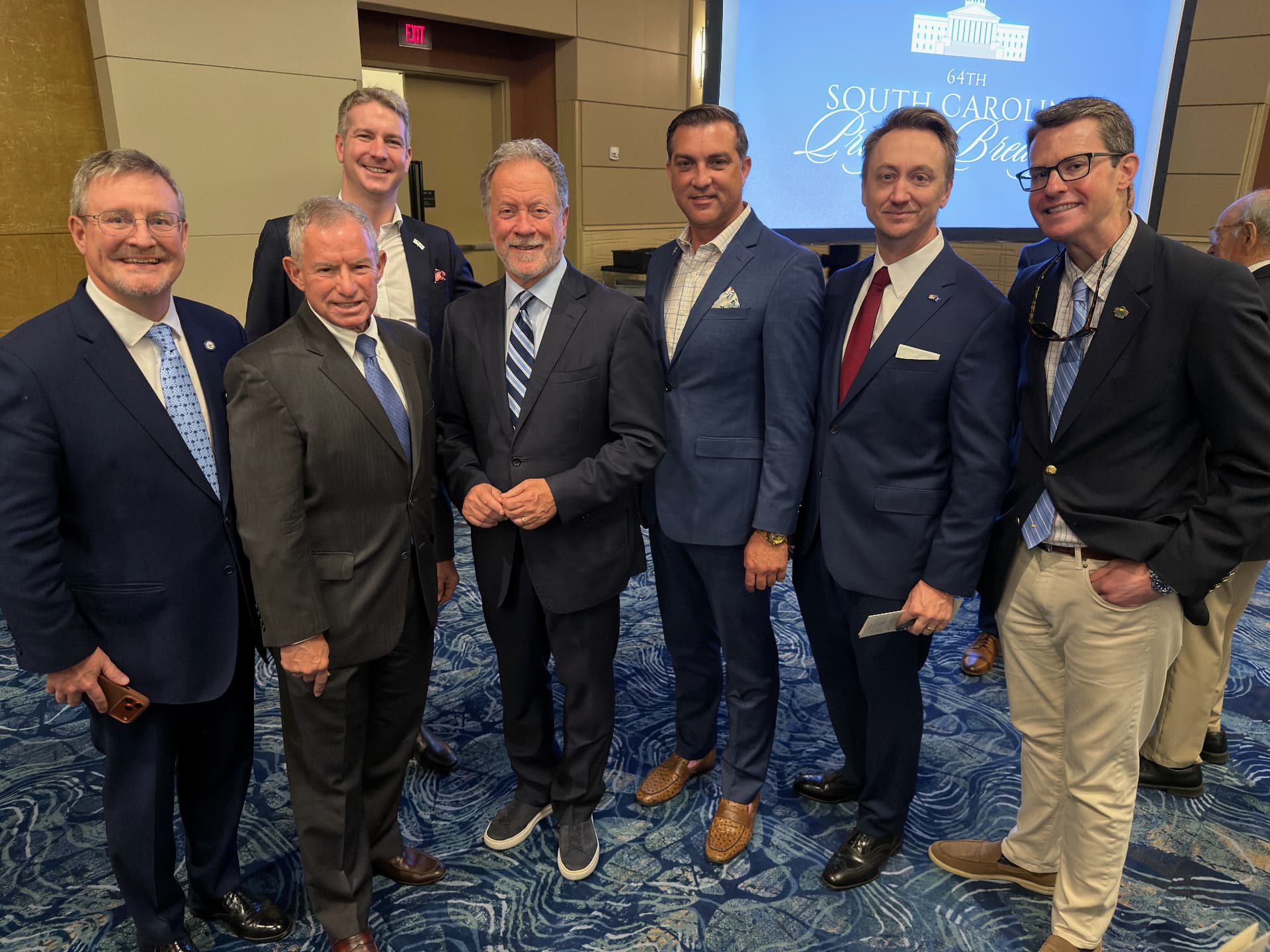
In April 2026, I travelled from Charleston to Columbia with several men from our Come Further Up, Come Further In! fellowship to hear David Beasley deliver the keynote address at the 64th South Carolina Prayer Breakfast.
The reception was warm, reflecting the affection and respect Beasley continues to command in his home state.
Here was a former governor whose subsequent international responsibilities had brought him into contact with kings, presidents, prime ministers, humanitarian agencies and communities devastated by war and hunger.
But the faith community gathered in Columbia was not simply familiar territory to which Beasley had returned after years on the international stage.
It was his natural habitat.
His Christian faith, the relationships formed through prayer and fellowship, and his conviction that people can find common ground even across profound differences have long shaped his approach to public life.
David would describe himself as a follower of Jesus. That is an important distinction in understanding how he approaches relationships.
His faith is not simply a private conviction or a label attached to his public life. It informs the way he approaches people, builds friendships and seeks common ground, even where profound differences exist.
Indeed, it was from that foundation, and with the confidence and moral authority it provided, that Beasley went on to engage, befriend and encourage kings, presidents, prime ministers and other leaders across the world—often across political, religious and cultural divides that others might regard as insurmountable.
These relationships have included engagement with His Highness Sheikh Mohamed bin Zayed Al Nahyan, President of the United Arab Emirates; Mohammed bin Salman, Crown Prince and Prime Minister of Saudi Arabia; and King Abdullah II of Jordan.
These are leaders of Muslim-majority nations, within whose Islamic tradition Jesus is honoured as a prophet, although not understood in the same way as in Christianity.
Such theological differences need not prevent friendship, mutual respect or cooperation in the service of people facing hunger, displacement and conflict.
Beasley's approach illustrates a distinction too often lost in contemporary political and religious debate: the ability to hold firmly to one's convictions while extending friendship to those who do not share them.
His international experience did not displace those foundations. It gave them a much wider field in which to operate.
His subsequent launch of Breaking Bread Together can be understood in that same context.
But there is an important distinction between being warmly received by people who already know one's story and establishing recognition across the American electorate.
Can the personal regard Beasley commands in South Carolina, and the international stature he earned at the World Food Programme, translate into recognition among voters from California to New York, across the heartland and throughout the industrial states that proved so consequential to President Trump's victories?
His humanitarian achievements are substantial. But they are not necessarily familiar to the ordinary American voter.
His national reconciliation initiative provides an opportunity to introduce himself and his ideas to new audiences. It does not, by itself, establish a presidential campaign.
Whether Beasley ultimately chooses to seek elected office or continue building bridges outside party politics, the question of how far his message can travel is worth watching.
A Presidential Path?
Nothing in Beasley's public statements suggests an imminent candidacy, and this examination does not assume one. But the structural questions any unconventional candidacy would face are worth setting out.
Personal regard and political arithmetic are different things.
I struggle to identify a convincing route by which David Beasley could become President of the United States in 2028.
That is not a judgment on his character or capacity for public service.
It is an assessment of the structural difficulties an unconventional candidacy would encounter.
If he sought the Republican nomination, he would confront a party whose primary electorate is heavily influenced by President Trump's political movement.
There is little public evidence of a national Beasley presidential campaign organization, fundraising structure or established Republican primary constituency comparable to those associated with more frequently discussed figures.
An independent candidacy would present a different and demanding set of challenges.
The United States has an electoral system that strongly favours its two principal parties. Ballot access varies from state to state. Presidential campaigns require extensive organization, substantial resources and a capacity to compete across a very large country.
And under the Electoral College, a candidate who attracts a respectable national percentage of the vote may still fail to win a single state.
But I can almost hear David Beasley challenging my political arithmetic.
He would remind me of the words of Jesus in Matthew 19:26 (NIV): “With man this is impossible, but with God all things are possible.”
And knowing David, he might go further, recalling Paul's counsel in 2 Corinthians 4:18 (NIV) that we should fix our eyes not on what is seen, but on what is unseen.
It would be entirely characteristic of a man whose life has been shaped by faith to caution against allowing present circumstances to define the limits of what might become possible.
I take that challenge seriously.
But neither faith nor friendship relieves us of the responsibility to examine political realities as they stand.
There is a distinction between believing that God can open doors which appear firmly closed and claiming to know which doors He intends to open.
Beasley's experience at the World Food Programme, and his relationships with leaders across the world, testify to a public career that has already travelled far beyond what might once have seemed a conventional political path.
Perhaps there are further chapters still to be written.
For now, the political route remains difficult to discern. But I would be the last to suggest that what we can presently see is all there is to the story.
And there is another consideration.
David Beasley would not necessarily have to win the presidency to change the outcome of the presidential election.
The Political Arithmetic of the Middle
Imagine a presidential election in which the two major parties are separated by only a few thousand votes across several battleground states.
An independent candidate appealing to moderate Republicans, conservative Democrats, faith communities and politically disengaged Americans could alter the result without coming remotely close to winning the presidency.
Indeed, the distribution of those votes might matter more than their national total.
It would be a mistake to assume that Beasley's supporters would come principally from one party.
His Republican political history might appeal to conservative voters dissatisfied with the eventual Republican nominee.
His humanitarian achievements and approach to international engagement might attract Democrats and independents.
His Christian faith and relationships across religious communities might also appeal to people whose political identities are more complicated than party labels suggest.
Some who supported him might otherwise have stayed at home.
Others might vote for one of the major parties in his absence.
That makes the electoral mathematics difficult to predict.
Consider, too, Andy Beshear.
Beshear's appeal in Republican-leaning Kentucky, his public expression of Christian faith and his emphasis upon family and practical government overlap in some respects with constituencies Beasley might seek to engage nationally.
Such overlap does not establish that the same individuals would support both men.
But if Beasley moved from civic outreach into an independent presidential campaign while Beshear sought the Democratic nomination, questions about their respective constituencies would become part of the electoral calculation.
The effect could extend to Republican candidates as well.
A candidate does not need to win an election to affect its result.
And this raises an important strategic question.
Would an independent Beasley candidacy help advance the principles he has spent much of his public life defending—or might it inadvertently make their advancement more difficult by changing the balance between the two principal contenders?
There is no simple answer.
But the question deserves consideration before anyone treats a third presidential candidacy as an uncomplicated expression of political dissatisfaction.
A Larger Contribution Than a Campaign?
There is another possibility.
The next president, irrespective of party, will inherit a nation suffering from deep political division and a world confronting serious humanitarian, diplomatic and security challenges.
The next administration will need people who understand not only the exercise of American power but also the cultivation of confidence, cooperation and practical relationships.
David Beasley has spent years working in precisely those circumstances.
He knows the humanitarian consequences of conflict.
He understands the complicated relationship between food security, migration, economic instability and political unrest.
And he has developed personal relationships with leaders across the international system.
Such experience would be relevant to several areas of government.
A future president from either party could consider drawing upon Beasley's experience in a senior advisory, diplomatic or appropriately constituted Cabinet-level role.
His contribution need not be limited to international affairs.
He possesses qualities that could be relevant within the United States itself, particularly in efforts to rebuild relationships across political and social divisions.
That is not to say that reconciliation requires Americans to abandon their convictions or disguise serious disagreements.
It requires something more demanding: the willingness to recognize the humanity of those with whom we disagree, to engage them seriously and to seek common ground where it genuinely exists.
Beasley has demonstrated a capacity for that form of engagement.
And while such relationships do not provide an obvious route through a presidential primary, they remain relevant to the work of government.
The Value of Those Who Do Not Win
American political commentary is understandably preoccupied with winners.
Who leads the polls? Who raises the most money? Who secures the endorsement? Who wins the nomination?
But political leadership cannot be measured only through electoral success.
Some of the most consequential people in government have never won an election.
Others have made their greatest contribution after their own electoral ambitions came to an end.
There are offices to be filled, institutions to be strengthened, relationships to be repaired and difficult decisions to be made.
These require people of ability, experience, integrity and good judgment.
David Beasley's public career offers substantial evidence of experience in several of these fields.
Whether he ever seeks the presidency is his decision.
Whether he could win it is another question entirely.
But a difficult electoral path should not be confused with an absence of public value.
The contribution David Beasley could make within a future administration deserves consideration quite apart from whether he ever seeks the presidency himself.
IV. The Final Stretch
What We Will Be Watching After November 3
The starting gates for the 2028 presidential contest remain open.
They will remain open for some considerable time.
Some of the names already being discussed will eventually declare their candidacies. Others will decide that the political conditions are unfavourable, their ambitions better pursued elsewhere, or that the cost of a presidential campaign is simply too high.
And there will almost certainly be surprises.
Candidates presently dismissed as outsiders may emerge with unexpected strength. Early favourites may stumble. Political alliances that appear secure today may prove remarkably temporary.
The November 3 midterms will provide the first substantial opportunity to reassess the field.
The Republican Question
The immediate test for Republicans is whether the political coalition assembled by President Trump can deliver electoral success when he is not himself on the ballot.
A strong Republican result would provide evidence for those arguing that the administration's political programme continues to command substantial support.
Substantial losses would raise questions about policy, political communication, candidate selection and the wider public's judgment of the administration.
Either outcome would influence the succession debate.
For JD Vance, the result may strengthen or complicate the argument for continuity.
For Marco Rubio, it may help determine how his international experience and emerging public philosophy fit the party's changing political priorities.
For Glenn Youngkin, the results in suburbs and competitive districts may offer evidence about the relevance of the political approach that brought him to the Virginia governorship.
For Ron DeSantis and others, the midterms could shape the debate about whether the party should maintain its present course or reconsider elements of its direction.
The Democratic Question
For Democrats, the midterms will be interpreted through several competing political arguments.
Progressives will examine turnout and enthusiasm among younger voters and the party's traditional constituencies.
Moderates will scrutinize results in suburban communities, competitive congressional districts and states where Democratic candidates have demonstrated an ability to attract independent voters.
The party's governors will seek evidence that their records in office offer a credible foundation for national leadership.
Particular attention should be paid to North Carolina.
If Roy Cooper wins his Senate contest, his performance will provide further evidence about Democratic electoral success beyond the party's established base.
His personal ambitions may remain modest.
The significance of his electoral example could nevertheless be substantial.
Kentucky and other Republican-leaning states will also provide information relevant to Andy Beshear's political approach.
And the results in races featuring progressive-backed candidates will offer evidence about the movement associated with Alexandria Ocasio-Cortez.
Behind all of this lies the argument increasingly evident in conversations with Democratic donors: the party needs more than a collection of personalities.
It needs a coherent message.
Should Democrats gain control of the House, they will have the opportunity to develop an agenda in Congress while confronting a president determined to use the powers of his office.
That confrontation could dominate the next two years.
The existing stream of presidential directives could become a torrent.
And if it does, the emerging presidential contenders will have to decide how they address the confrontation—not merely how loudly they oppose it.
The Question Beyond Both Parties
And what of the millions of Americans who are less concerned with which political faction wins an argument than with whether the country can be governed effectively?
They will be watching the same election through a different lens.
Can Washington work?
Can government provide a stable environment for investment, enterprise and employment?
Can political leaders address the pressures facing families while maintaining America's security and international relationships?
Can the country disagree without allowing disagreement to become permanent hostility?
These are not uniquely Republican or Democratic concerns.
They are national concerns.
And they point towards a final distinction that may prove important in 2028.
Winning the presidency and governing the country are not the same undertaking.
A candidate may possess the political skills needed to assemble a majority without necessarily possessing all the experience, judgment and relationships needed to govern well.
That is why the people a prospective president attracts into an administration may matter almost as much as the person at its head.
It is also why figures such as David Beasley deserve consideration in a discussion that might otherwise be confined to party primaries and electoral arithmetic.
The personal relationships and experience cultivated over decades of public service may prove useful regardless of who ultimately occupies the Oval Office.
The Road to 2028
In the months ahead, Diplomatique™ will return to the runners and riders.
We will examine their political records, emerging programmes, relationships, fundraising and capacity to assemble an electoral coalition.
We will pay particular attention to the states that may determine the presidency and the economic and international developments capable of changing the electorate's priorities.
Our assessment will evolve as evidence emerges.
But we have chosen to establish this first view before the midterms precisely because the results will change the calculations.
It will be instructive to return to these names, arguments and questions after November 3.
Some horses will have moved forward in the field.
Others may find the going considerably heavier.
And a few who have not yet appeared in the paddock may turn out to matter more than those currently attracting the loudest applause.
The race for the White House in 2028 has not formally begun.
But the contest over America's political future is already well underway.
Diplomatique™ — Understanding the Times.
