Lens · Ethics & Responsibility
When the House Needs Putting Right
Colin Bloom on corporate repentance, the demands of leadership, and the calling to serve persecuted Christians
Mark J. Finlay | Editor · No. 3 · 22 October 2026

Colin Bloom speaking at the Consciência Cristã conference
I · THE CALL
From Bora Bora to Barnabas
There are easier ways to begin retirement than taking charge of a Christian charity in crisis.
Colin Bloom was scuba diving off Bora Bora, in the turquoise waters of French Polynesia, enjoying the early days of a well-earned retirement after years in and around the corridors of Downing Street.
For once, Westminster and its endless demands seemed half a world away.
He surfaced from a dive to discover that Elon Musk had other ideas.
Thanks to Starlink, even paradise was no longer beyond the reach of a telephone call.
Barnabas Aid needed help.
One might reasonably have hoped that somewhere in the South Pacific, an unreliable signal would have provided a perfectly respectable excuse for remaining unavailable.
No such luck.
The signal was excellent. The timing was questionable.
What was supposed to be a few months helping a troubled Christian charity would become an altogether different calling.
The charity's purpose matters to the story. Founded in 1993, Barnabas Aid exists to support Christians facing persecution, discrimination, displacement and poverty. Its work is directed to people who may lose their homes, their livelihoods, their liberty or even their lives because of their faith. The institution was established for those beyond its doors.
Colin was hardly a stranger to difficult assignments.
His career had taken him through years of political work and government advice on faith, communities and the relationship between government and religious life. He had worked with political leaders and developed relationships across the Commonwealth and beyond.
He understood the difference between holding office and exercising influence. He knew the peculiar pressures of Westminster and the importance of relationships built quietly over many years.
After Liz Truss's remarkably brief premiership, he had been ready to leave political turbulence behind.
Yet the crisis awaiting him at Barnabas Aid would require much of what he had learned in government, along with qualities that no political apprenticeship can guarantee: the ability to listen, the willingness to confront uncomfortable truths, and the courage to act.
Its mission was compelling. Its supporters had entrusted it with money and confidence.
But the organization had been shaken by serious failures.
Its founder, Patrick Sookhdeo, had previously been convicted of sexual assault and witness intimidation. Those convictions must be distinguished from later complaints and allegations concerning leadership, workplace culture, financial management and governance. Allegations of financial misconduct and the questions under regulatory examination are not, by themselves, findings of criminal guilt.
These developments left the institution facing questions that could not be answered merely by changing its leadership. The UK charity's continuing regulatory process also needs to be distinguished from the work and governance of the wider international organization.
Colin was stepping into an organization whose mission remained important, but whose credibility had been severely damaged.
A ministry established to stand alongside vulnerable Christians had first to confront its own vulnerability to failed leadership.
It was not an assignment that could be completed by issuing a new mission statement, appointing a communications consultant or quietly changing the names on the office doors.
The house needed putting right.
And the work would begin with an unusually uncomfortable word.
Repentance.
II · THE RECKONING
Repentance is not a public relations strategy
One of the most striking aspects of Colin's approach is his willingness to use language that rarely appears in corporate restructuring plans.
Not merely renewal.
Not reputational recovery.
Not even reform.
Repentance.
Colin’s message to his team on his first day was unequivocal: “We as an organization have done wrong.”
It is an unusual opening message for an incoming chief executive.
The ordinary corporate crisis response offers a fresh start: a new leadership team, a repaired reputation, perhaps a new name. Such measures may be necessary. They do not, on their own, settle what happened or what is owed to those harmed.
The New Testament word for repentance is metanoia — a change of mind that demands more than a change of opinion. True repentance changes the direction of one's life.
Sailors understand something of this. When the prevailing wind is against them, they do not necessarily abandon their destination. They change tack, sometimes repeatedly, to make progress towards it.
Under Colin Bloom's hand on the tiller, Barnabas Aid has made a discernible change of tack. Its founding purpose remains the destination; its governance, stewardship and accountability are among the things that must change if it is to reach that destination faithfully.
The destination has not changed. The means of reaching it must.
That is the difference between managing a crisis and embracing repentance.
Metanoia literally means a change of mind; changed direction is the biblical and practical implication, not the literal translation. For Christians, repentance is a familiar theological and personal discipline. Applied to an institution, it requires examining conduct, not merely how that conduct is perceived.
The change of tack is my editorial judgment, informed by my conversations with Colin. It is not a declaration that reform is complete or that the investigation is resolved. Repentance must be expressed in demonstrable reform; eventual redemption cannot simply be announced.
It requires acknowledgment of wrongdoing, accountability for decisions, changed practice and, wherever possible, restitution. Regret describes a feeling. Reputational repair changes an impression. Repentance must change what the institution does.
Christianity offers a profound account of forgiveness and redemption. But forgiveness cannot become a substitute for accountability. Grace cannot be used to excuse behaviour that would rightly be condemned in any other institution.
Indeed, an organization claiming to act in Christ's name should be particularly careful not to confuse loyalty to its founder with faithfulness to its founding purpose.
The biblical prophets were not reluctant to challenge religious leaders who maintained the appearance of righteousness while neglecting justice.
In Isaiah's first chapter, the prophet calls for wrongdoing to cease, justice to be pursued and the oppressed to be defended.
It is a demanding standard against which to read Colin's recurring explanation of reform: acknowledgment, corporate repentance, transparency and a renewed commitment to excellence.
He describes work to strengthen financial controls, safeguarding, the responsibilities of governing bodies and scrutiny of projects. That account deserves attention, but a description of reform is not proof that reform has worked. The test is whether controls operate, concerns can be raised safely, decisions can be challenged and failures bring consequences.
There is nothing particularly glamorous about financial controls, safeguarding policies or audit procedures.
But sound governance seldom makes for exciting photographs. Its importance becomes painfully apparent when it is missing.
In our conversations, Colin and I explored the particular challenge of leading Christian institutions through failure.
There is a temptation, especially within organizations built around strong personalities, to treat criticism as disloyalty. Questions become threats. Whistleblowers become enemies. Protecting the institution's reputation gradually becomes more important than protecting the people it exists to serve.
And before long, defending the mission becomes indistinguishable from defending those who have misused their authority.
That is precisely the danger good governance is intended to prevent.
The first duty of those governing a charity is not to protect a founder, a chief executive or even the institution's reputation. It is to protect its purpose, its people and the resources entrusted to its care.
Sometimes that requires the courage to confront those who established the organization.
Sometimes it requires the humility to admit that procedures long taken for granted were inadequate.
And sometimes it requires an outsider to ask questions that those closest to the institution have stopped asking.
Independent scrutiny, continuing reform
On 19 June 2026, the UK's Charity Commission announced the appointment of independent interim managers to Barnabas Fund, also known as Barnabas Aid, as part of its continuing statutory inquiry.
The announcement named Edwina Turner and Catherine Gibbons of Anthony Collins LLP, appointed to the exclusion of the UK charity's trustees. Their remit includes full control of its administration, assets, records, banking and governance; investigating historic decisions and related-party arrangements; protecting and recovering assets where necessary; and regularising governance and reporting to the Commission. This is not an appointment to govern every organization within the international Barnabas network.
It was a significant regulatory intervention.
But how does such an arrangement work in practice, particularly when the international organization is already pursuing operational reforms?
I put the question directly to Colin.
How do you interface with Edwina Turner and Catherine Gibbons?
His answer was refreshingly straightforward.
“Very good relationship — they are like a super trustee.”
It is an illuminating description.
Rather than portraying independent oversight as an adversarial intrusion, Colin describes a constructive working relationship with those appointed to exercise authority over the UK charity.
The interim managers have their own responsibilities to the Charity Commission and must exercise independent judgment. Their role is not to endorse Colin's leadership or simply approve decisions made elsewhere.
That is Colin's account of the relationship, not an independent assessment of the interim managers' work or the success of the reforms.
Independent accountability need not be the enemy of institutional recovery. Properly exercised, it can help make recovery possible.
The appointment also underscores an important distinction between the UK charity's regulatory responsibilities and the wider international mission that Colin continues to lead.
The statutory inquiry remains ongoing. The appointment does not mean that the inquiry has concluded, that allegations have been resolved or that the international organization's reforms have received regulatory endorsement.
Continuing to help people and submitting to scrutiny are not alternatives. Urgent need cannot excuse inadequate safeguards, any more than regulatory scrutiny makes the people needing help disappear.
III · THE CALLING
The least of these — and the work still to be done
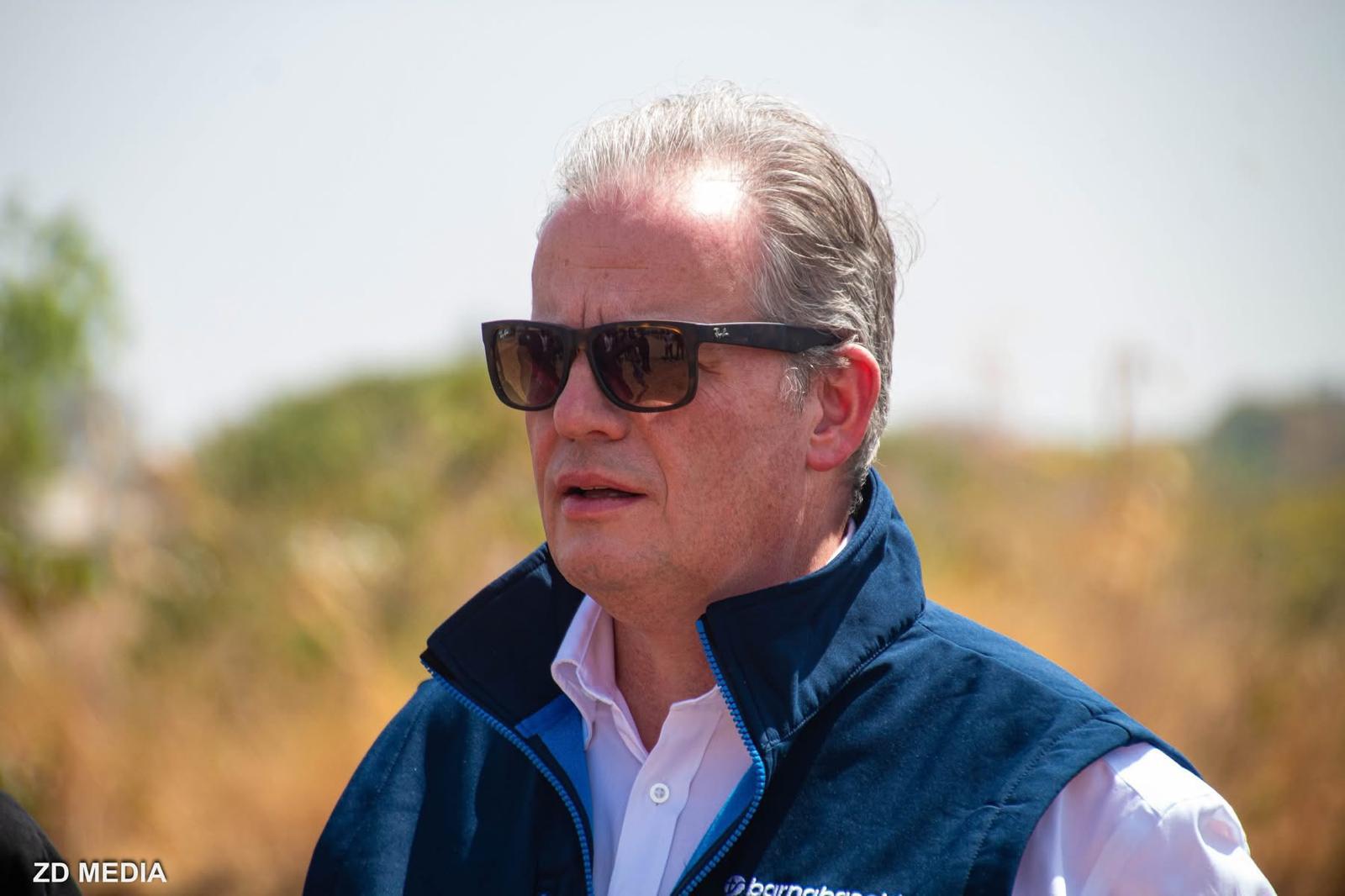
Colin Bloom with Barnabas Aid in the field — ZD Media
There is a danger in every account of institutional recovery.
The story of the organization can become more interesting than the people it was established to serve.
Barnabas Aid's stated purpose is to stand alongside persecuted, suffering and marginalized Christians around the world, not to perpetuate an institution or preserve the reputation of its founders.
Behind the figures are families driven from their homes, pastors imprisoned, churches destroyed, children denied education and communities whose presence in their ancestral homelands is increasingly precarious.
Statistics tell us something about the scale of the problem.
They cannot tell us what it feels like to be the father who cannot find work because of his faith, the mother who fears for her children, or the pastor who knows that gathering his congregation may invite violence.
These are not merely statistics.
They are people.
And for Christians, they are family.
In Matthew 25, Jesus identifies Himself with the hungry, the stranger, the sick and the imprisoned. His words about the least of these leave little room for treating human suffering as someone else's responsibility.
This is where Colin's leadership must ultimately be measured: whether sound governance and careful stewardship produce demonstrable benefits for those the organization exists to serve. Policies and outcomes belong in the same examination.
Four commitments. One calling.
The house exists for those beyond its doors.
Barnabas Aid sets out four commitments — Education, Aid, Empowerment and Advocacy — directed towards Christians facing discrimination, violence and dispossession. Colin, the team and the governing bodies describe their work in these terms; the commitments are the charity's stated framework, not a claim that Colin originated them.
The headings suggest four different responses: education for the future, immediate assistance, greater independence and the defence of fundamental freedoms. Their value depends on what happens beyond the headings.
The test of renewed leadership is whether those commitments are translated into measurable improvements, with honest reporting when a project falls short.
From good intentions to good stewardship
There is, however, another dimension to Colin's leadership that deserves attention.
A charitable organization cannot measure its faithfulness simply by the generosity of its intentions. It must also ask whether the money entrusted to it reaches the people for whom it was given, whether its projects are well chosen, and whether the assistance provided produces lasting benefits.
Colin's recurring explanation is that project decisions should draw on conditions on the ground, evidence and an assessment of likely results, with broader scrutiny of spending. He describes stronger controls and safeguarding requirements within the international organization. These are claims about changed practice whose operation and effectiveness still need to be demonstrated.
The international umbrella body's move from the Nexcus International name to Barnabas Aid International is a change in presentation, not in itself evidence of better governance. A clearer name may help readers understand the structure. It does not tell them who can challenge a spending decision or obtain redress when something goes wrong.
For a donor in Charleston, Belfast or Sydney, the route by which a contribution passes from a local Barnabas organization to a project supporting Christians in Pakistan, Nigeria or elsewhere should be comprehensible.
Transparency is not merely about publishing accounts. It is about being able to explain who makes decisions, who is responsible for the money, and how the results are assessed.
In a staff Bible study, Colin drew upon Paul’s teaching in 1 Corinthians 12:26: when one member of the body suffers, the others suffer with it.
The difficulties faced by those working at Barnabas Aid, however real, must be seen in the light of the far greater hardships endured by the people they are there to help.
It is a necessary reminder for any institution navigating a crisis.
The purpose of putting the house in order is not to admire the newly repaired house. It is to make certain that those beyond its doors are better served.
Education — equipping the next generation
Persecution can deprive young people of schooling, prevent adults from gaining qualifications and deny Christian communities the opportunity to develop their own leaders.
Education is therefore more than a route to employment.
It helps families recover their independence, strengthens churches and equips people to contribute to the societies in which they live.
Consider the account Barnabas Aid gives of Asma, a 13-year-old Christian girl whose family lives in bonded labour at a brick kiln in Pakistan. The charity describes her widowed mother's long years in the kilns and debts that make escape difficult.
In that account, a Barnabas-supported school offers Asma education and the possibility of a different future. This is the charity's project story, not a family I have interviewed or an outcome independently established by this publication.
In September 2026, Barnabas Aid reported that its support had enabled more than 4,120 marginalized Christian children to attend 55 schools in Pakistan during 2025.
The reported figure measures access to schooling, not whether children have escaped bonded labour or secured a lasting livelihood. Attendance, safety, learning and progress over time are the questions that would establish the difference the support makes.
For a child in Asma's circumstances, that difference could be profound: not merely another classroom, but a possible way out of inherited poverty. The possibility should be taken seriously without being presented as an achieved result.
Aid — meeting the need immediately before us
There are moments when the first responsibility is simply to help people survive.
Food. Shelter. Medical care. Protection. The means to endure another day.
Barnabas Aid presents emergency assistance as part of its work. Its value must be judged by whether help reaches people in time, is appropriate to their circumstances and can be delivered without exposing them to further harm.
That distinction matters.
Good intentions are not enough if assistance inadvertently increases dependency, exposes recipients to danger or undermines local communities.
Compassion must be accompanied by judgment.
Empowerment — helping communities stand again
Perhaps the most consequential of the four commitments is empowerment.
Barnabas Aid describes support for Christian-led businesses, farms, cooperatives and local ministries, with the aim of helping vulnerable believers become increasingly self-sustaining. An aim is not yet an outcome: continued livelihoods, local control and resilience after assistance ends would be meaningful evidence.
There is a profound difference between providing a family with food for a week and helping that family recover the means to feed itself.
Both may be necessary.
But the second begins to restore something persecution so often seeks to destroy: the ability to shape one's own future.
A thriving local enterprise can sustain employment, support families and strengthen the community around it.
A productive farm can do more than provide a harvest. It can help people remain on land their families have occupied for generations.
These are the possibilities against which such projects should be assessed. A funded enterprise is not necessarily a thriving one, and a harvest does not by itself establish lasting security.
Advocacy — ensuring the forgotten are heard
There are also circumstances in which humanitarian assistance alone cannot address the problem.
When Christians are imprisoned, discriminated against or denied legal protection because of their faith, someone must be willing to speak on their behalf.
Advocacy can involve legal assistance, raising awareness, engaging political leaders and helping international institutions understand what is happening.
Colin's political experience and international relationships may be useful here. But access is not the same as protection achieved. Quiet diplomacy and public advocacy alike should be judged by their effects, with care not to expose vulnerable people through publicity they have not chosen.
Religious freedom is not simply a matter of religious policy.
It is bound up with the rule of law, national security, economic opportunity and the treatment of minorities.
A country that cannot protect freedom of conscience will struggle to protect many other freedoms.
Leadership beyond the headquarters
What has impressed me in my conversations with Colin is the determination to ensure that Barnabas Aid's institutional recovery does not become an end in itself.
The challenge is to maintain sound stewardship, respond to independent scrutiny and serve communities whose needs are immediate, without allowing a compelling account of the mission to substitute for evidence of its results.
These responsibilities are not competing missions.
They belong together.
Confidence should follow evidence, not precede it. Independent oversight, accessible complaints procedures, safeguarding and candid reporting of unsuccessful projects are not distractions from the calling. They are part of honouring it.
This is what corporate repentance ought to mean in practice.
Not simply that an institution survives.
But that changed conduct enables it to serve others better, and that people harmed by its failures are not forgotten in the story of recovery.
IV · A FRIEND AT THE TABLE
Why we shall be hearing more from Colin Bloom
I should declare my interests.
Colin is a longstanding friend, and I have considerable respect for the work he has undertaken at Barnabas Aid.
My wife, Karen, serves on the board of Barnabas Aid USA, having been invited to join during Colin's leadership.
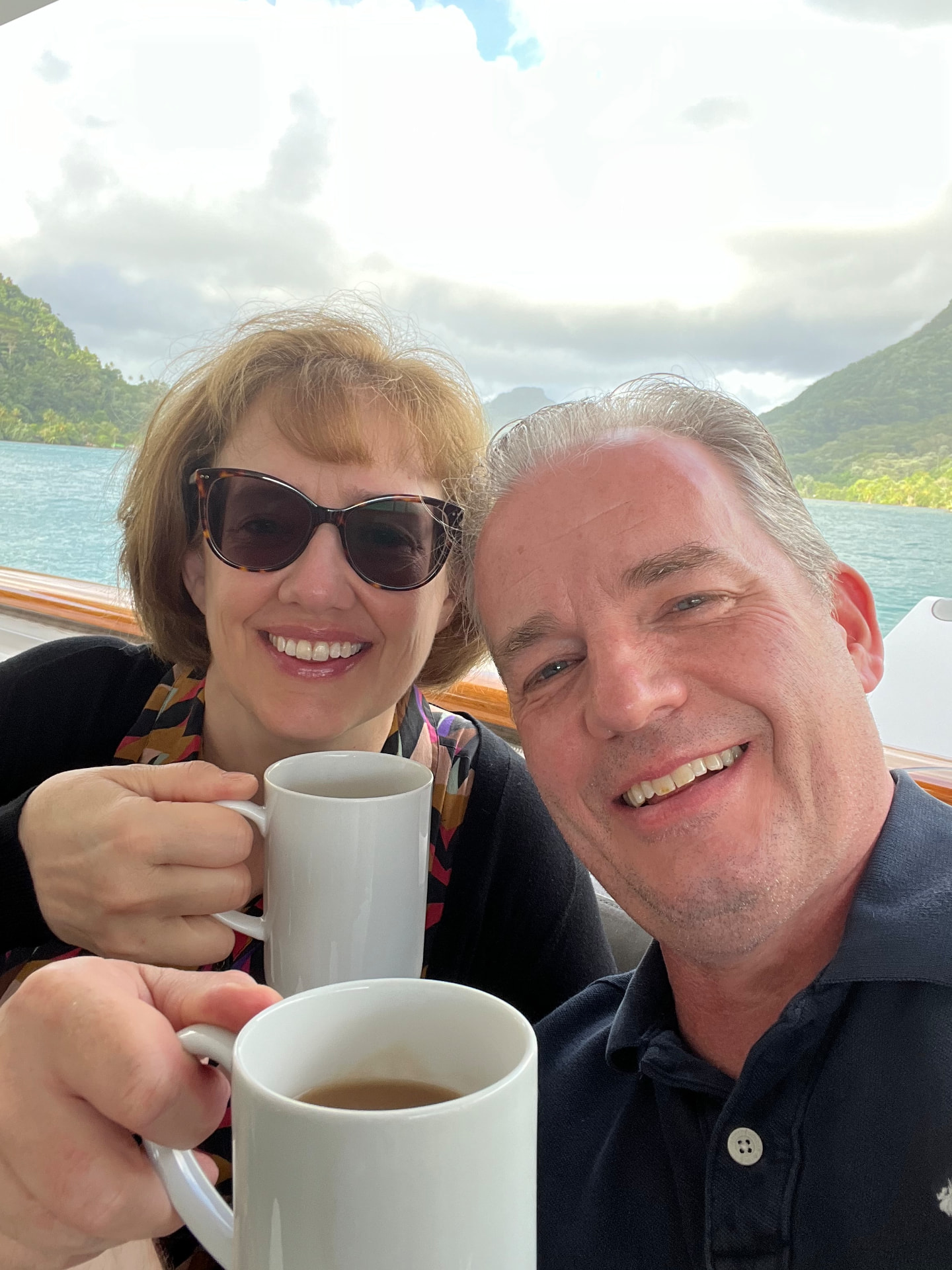
Colin Bloom with his wife, Helen
Colin also serves on the advisory boards of Diplomatique™ and Guiding Principles™, the advisory business behind this publication.
These relationships deserve to be stated plainly, particularly in an article concerned with transparency and accountability.
They also provide an opportunity for conversations that extend beyond formal interviews and prepared statements.
I have seen something of the demands placed upon Colin and have discussed with him the challenge of leading an organization through such a difficult period.
I admire his determination.
But friendship should never prevent difficult questions. Indeed, the better the friendship, the more readily those questions ought to be asked. These relationships do not amount to independent verification of the charity's accounts, project results or reforms, and this article draws on no confidential board information.
There is a wider reason for introducing Colin to our readers.
Diplomatique™ is concerned with understanding the times.
That requires listening to people whose knowledge has been acquired not only through reading government papers, but through years of meeting leaders, visiting countries and dealing with the practical consequences of political decisions.
Colin has spent much of his life doing precisely that.
He understands the peculiar culture of Westminster, the value of relationships across political traditions and the importance of faith in societies where secular policymakers sometimes underestimate its influence.
He also understands that a country's formal diplomatic position is not always the same as the realities encountered by people living within its borders.
We intend to draw upon that experience in future editions, including our Diplomatique™ City series, where the geography of influence, personal relationships, culture and diplomacy often tell us as much about a capital as its official institutions.
We shall also return to the work of Barnabas Aid, particularly where the circumstances of persecuted Christian communities illuminate larger questions about religious freedom, national sovereignty, international security and the responsibilities of government.
Not every contribution needs to be a grand geopolitical essay.
Sometimes a conversation with someone who has just returned from a difficult country can tell us more than a stack of official communiqués.
And Colin knows a remarkable number of those countries and the people who shape their futures.
V · THE INVITATION
What, then, shall we do?
I began this account with a man surfacing from a scuba dive off Bora Bora, discovering that Starlink had ensured even the South Pacific was not beyond the reach of an unexpected calling.
It is an amusing beginning to a serious story.
Colin thought his years of public service were behind him.
Instead, he found himself called to serve in a different way.
There is a question here for the rest of us.
What if the responsibility to help persecuted Christians does not belong solely to those who lead charities, serve in government or travel to distant countries?
What if it belongs to all of us?
Not everyone can visit a displaced community in Africa or Asia.
Not everyone can speak to a foreign minister, advocate for a prisoner of conscience or establish a livelihood programme.
We can pray, become informed and encourage our churches to remember fellow believers whose circumstances rarely appear in the headlines. Those with the means to help can examine where assistance is needed and which organizations can demonstrate that they provide it responsibly.
And those of us with access to political, commercial or diplomatic relationships can ask whether those relationships might be used to help people who have little influence of their own.
There is no shortage of need.
The question is whether there is a corresponding willingness to respond.
Barnabas Aid's account of its mission is linked below for readers wishing to examine it. It should be read alongside its governance, financial reporting and evidence of results, not as a substitute for them.
The invitation is not to suspend judgment or overlook the importance of accountability.
Quite the opposite.
Supporters should expect transparency, evidence of effective stewardship and clear reporting of results.
Those expectations are part of responsible generosity.
But the failures of an institution must not become an excuse for forgetting the people it was founded to serve.
The wider Church's responsibility is larger than the recovery of any one charity. It includes standing alongside suffering Christians and insisting that institutions acting in their name are answerable for what they do.
Colin's use of repentance makes the question sharper, not easier. A repaired reputation would be welcome. A changed institution must be demonstrated.
The house needs putting right for the sake of those beyond its doors — and those harmed within them.
The question is not simply whether Barnabas Aid can recover. It is whether acknowledgment becomes accountability, whether promises become changed practice, and whether restitution is pursued wherever possible.
That is the difference between announcing repentance and living it.