The verdict
A Divided Washington
Democrats have won control of both the House and the Senate. President Trump will govern alongside the 120th Congress when it convenes on 3 January 2027 — the change of control comes then, not now.


Intelligence · Perspective · Distinction
VOL. I · NO. IV · MMXXVI · 5 NOVEMBER 2026

To look up at The Apotheosis of Washington under the Capitol dome is to witness an idealized vision of American leadership that stands as the absolute antithesis of today’s midterm political reality.
The Apotheosis of Washington — true fresco by Constantino Brumidi, 1865, in the eye of the Rotunda. Photograph: Mark J. Finlay · Diplomatique™ archive
I · Understanding the Times™

Mark J. Finlay · Editor
Diplomatique™ · Vol. I · No. IV · Thursday, 5 November 2026
Caricature: Brian John Spencer, 14 March 2019
Remember, remember the fifth of November.
Four centuries after Guy Fawkes attempted to destroy Parliament, Britain continues to wrestle with questions about power, government and the institutions through which authority is exercised.
Across the Atlantic, Americans have just exercised a rather more constitutional means of expressing their dissatisfaction: the ballot box.
And what a message they have delivered.
The Republic has joined the Age of Discontent.
Democrats have won control of both houses of Congress, bringing an end to Republican control of the legislative branch and confronting President Trump with divided government for the final two years of his administration. From Texas and the Carolinas to Kansas, Iowa and the industrial communities of Pennsylvania, voters have overturned assumptions that once appeared secure.
For many voters, the grievances were painfully practical: the cost of food, fuel and farming; the burden of government and debt; and, increasingly, the price of war.
The national finances offer a stark illustration. Publicly held federal debt reached 100.03% of annual GDP in fiscal 2026, a threshold last crossed in 1946. Debt service already absorbs a growing share of federal revenue. These obligations have accumulated under successive presidents and Congresses of both parties.
President Trump campaigned on avoiding new wars and securing settlements to existing conflicts. Instead, the United States has undertaken new military action alongside Israel against Iran, while Russia’s invasion of Ukraine continues without the negotiated settlement he promised to pursue. Washington and its NATO allies have not always agreed on what a viable peace would require; Ukraine and neighbouring states fear that a settlement without credible security guarantees could invite renewed aggression.
War has costs beyond the battlefield. Disrupted energy markets, shipping, insurance, fertilizer and food supply chains feed through to farms and household bills. Tariffs and retaliatory trade measures add separate pressures. No single policy explains every increase, but for voters trying to balance a household budget, distinctions among government departments offer little consolation.
In France, farmers have brought tractors onto roads in protest. In America’s agricultural heartland, election results have delivered a different expression of discontent. Kansas and Iowa warrant close attention — not because every farmer votes alike, but because their agricultural communities have faced documented pressures from diesel, fertilizer, equipment and export costs.
The verdict is not a simple mandate for any one policy. Inflation, the cost of war, government spending and the conduct of elected officials all figured in the political conversation. Yet an election that changes both congressional majorities demands reflection from those entering power and those losing it.
Will the new Democratic leadership use its authority to pursue legislation and oversight? Will President Trump find common ground with opponents, or govern principally through executive orders and vetoes? Those questions will determine whether the next two years produce solutions or merely extend Washington’s disputes.
The electorate has changed the balance of power. What remains to be seen is whether Washington will change the way it governs.
In this edition, we open the British file in The Power List™, our growing Intelligence Library of the people, relationships and institutions through which power is exercised. We also identify selected American newcomers, while reserving a fuller examination of the incoming 120th Congress, its leadership and committee structure for No. V.
But first, across the Atlantic, the Kingdom.
Prime Minister Andy Burnham, barely three and a half months into office, is managing difficult economic decisions, arguments within Labour and a renewed debate over Britain’s relationship with Europe. Even among senior colleagues, there is no settled answer to how far the country should go in rebuilding ties with the European Union.
Britain needs growth, reliable and affordable energy, new homes, productive industry and a clearer account of its place in the world. Its government must reconcile those needs with competing commitments on public spending, energy and the environment.
The question is larger than Britain’s place inside or outside the EU. It concerns the relationship among the nations of the United Kingdom, continental Europe and the Atlantic partners upon whom their prosperity and security depend.
Our continuing work on the Atlantic Archipelago asks what these relationships could achieve in practice: thriving ports, shipbuilding, energy production, investment, industrial cooperation and the movement of goods, even where constitutional and political opinions differ. Geographic proximity and shared interests do not erase history; they can nevertheless create opportunities that political arguments too often obscure.
And across the institutions of the post-war world — from the EU to NATO and the United Nations — one question deserves examination.
Are the institutions governing our world still fit for purpose?
I remember Britain’s Winter of Discontent: the rubbish on the streets, industrial disputes and the creeping feeling that institutions upon which ordinary people depended could no longer deliver.

Uncollected refuse during Britain’s Winter of Discontent, 1978–79.
Photograph: Keystone/USA via ZUMA Press · licensed to Diplomatique™ for editorial use
I remember, too, the power cuts of the earlier 1970s, candles in our home and cooking on a camping stove.
Most vividly, I remember my father bursting into my bedroom shortly after ten o’clock on the evening of 28 March 1979, delighted to tell me that James Callaghan’s government had fallen by a single vote, 311 to 310.
It was an early lesson in how affairs of state can reach into a family home.
Today, from Tirana and Belgrade to Paris and Milan, we see different expressions of discontent. They do not share one programme or even one set of grievances. Neither did the Atlantic Revolutions of the eighteenth and nineteenth centuries, although later generations often place them beneath one heading.
The point is not to declare a new revolution. It is to understand why citizens in different countries are testing the promises, policies and institutions by which they are governed.
Europe’s eastern frontier adds another dimension. Russia’s war against Ukraine continues; NATO allies exercise across the Baltic region; and vulnerabilities in energy, food distribution and communications remind us how quickly distant strategic decisions reach everyday life.
This is where Where the World Narrows™ meets the experience of ordinary households. The points of dependency may be a maritime strait, a port, a railway, an energy terminal or a satellite network. Sometimes they may be the digital systems controlling a supermarket’s refrigeration.
Convenience is not the same as resilience.
Diplomatique™ also believes in the enduring significance of relationships.
This edition returns to Washington, a city of embassies, legislators and conversations that take place as often in corridors, restaurants and bars as around conference tables.
Our visits to Off the Record, Old Ebbitt Grill, Café Milano, the Monocle, Butterworth’s, Le Diplomate and Shelly’s Back Room remind us that consequential conversations often begin over coffee, continue over lunch, or linger late into the evening over a fine cigar and a glass of something worth discussing.
Our purpose remains to understand where power resides, how it moves and what its exercise means for the people whose lives it touches; to distinguish evidence from assertion, warning from manufactured fear, and genuine common concerns from fundamentally different political movements.
And to ask whether the institutions we have inherited are equal to the responsibilities now placed upon them.
The Republic. The Kingdom. And the Age of Discontent.
Across aisles. Across oceans.
Understanding the Times™
II · Power & Statecraft
The American electorate has not simply changed Congress. It has changed the terms on which Washington must now govern.
The verdict
Democrats have won control of both the House and the Senate. President Trump will govern alongside the 120th Congress when it convenes on 3 January 2027 — the change of control comes then, not now.
The economy
An electorate frustrated by high prices, the Iran war and corruption turned on the governing party. In Kansas, Adam Hamilton unseated Senator Roger Marshall; in Iowa, farm country was weighing fuel prices and retaliatory tariffs.
Firsts
Abdul El-Sayed becomes the first Muslim elected to the Senate; Keisha Lance Bottoms the first Black woman elected governor of a state; and Republican Byron Donalds Florida’s first Black governor.
Maine
Susan Collins conceded to Troy Jackson, ending her bid for a sixth term — the close of one of the Senate’s longest independent-minded careers in a year that swept away safer names than hers.
North Carolina
Former Governor Roy Cooper defeated Michael Whatley. Whether a Senate victory in a swing state enlarges a 2028 conversation is our question, not his announcement.
Michigan
Abdul El-Sayed defeated Mike Rogers for Michigan’s Senate seat. The milestone is religious; the mandate, in a manufacturing state, is also about wages, prices and work.
Texas · South Carolina
James Talarico defeated Ken Paxton; Annie Andrews defeated Senator Darline Graham. Both Republicans carried the President’s endorsement — a primary asset that did not carry a general election.
Pennsylvania 10th
Janelle Stelson defeated Representative Scott Perry, the former chairman of the House Freedom Caucus, in a Harrisburg-centred seat she had narrowly lost in 2024.
Results reflect reported race calls and concessions as of 4 November 2026; official certification may follow.
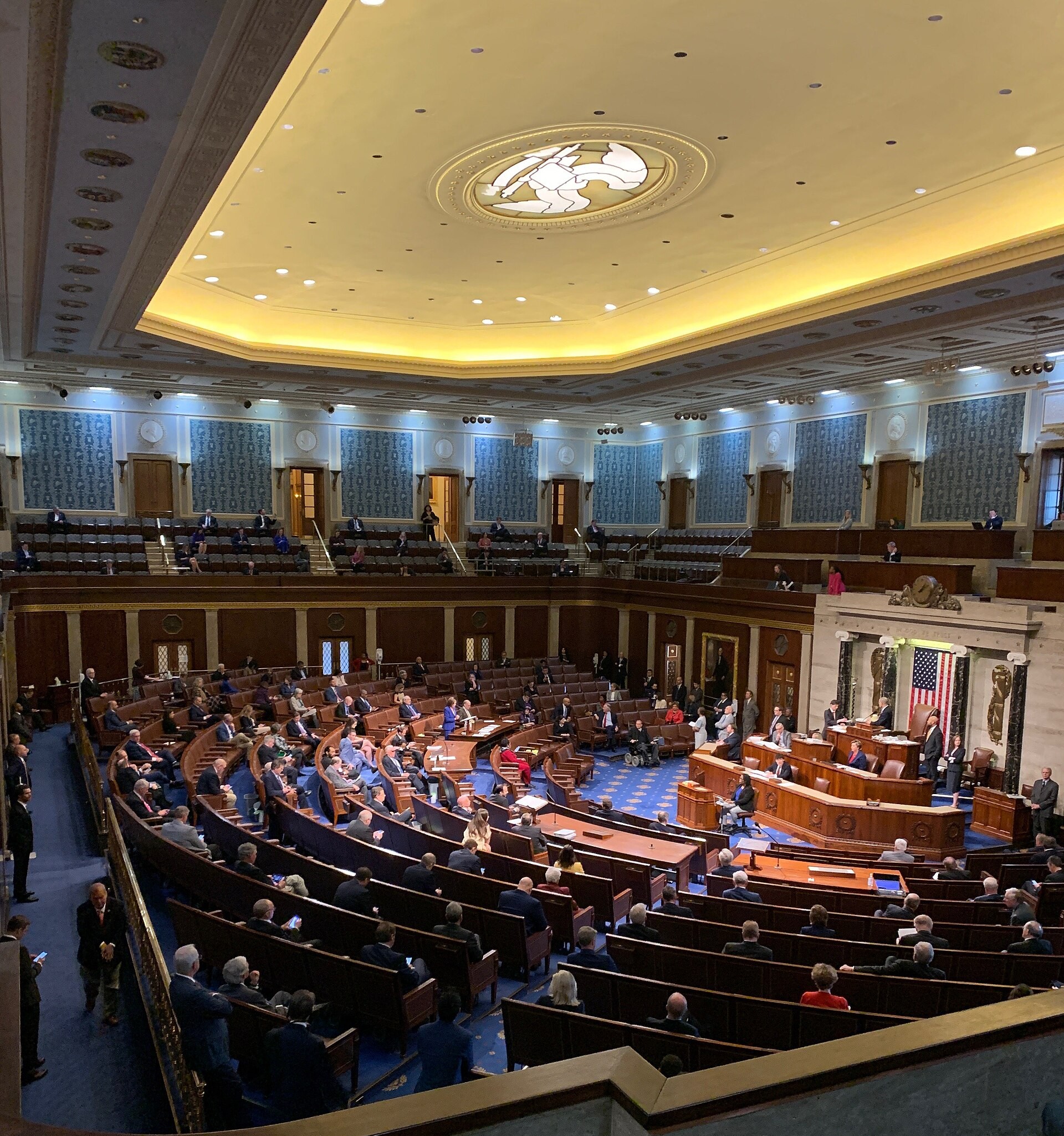
On 3 November, Americans delivered control of both the House of Representatives and the Senate to the Democrats. The Republican Party, which had entered the election defending President Trump’s governing majority, now faces the prospect of two years in which congressional committees, legislative priorities and the national political conversation will increasingly be directed by its opponents.
The final seat totals are still being determined. The political verdict is not.
The temptation will be to explain the result through the personalities who won or lost, the influence of President Trump, or the religious and racial identities of candidates. All are part of the story. None adequately explains its scale.
This election was not a referendum on the race or religion of candidates. It was a verdict from voters increasingly discontented with the cost of ordinary life, with promises unfulfilled, with American servicemen and women in harm’s way and no clear end to the fighting, and with a Washington seemingly more absorbed in its own quarrels than in the circumstances of the people it was elected to serve.
Consider the American family sitting around its kitchen table, trying to reconcile wages with groceries, petrol, insurance, housing and utilities. Promises of prosperity mean little when the household accounts refuse to balance.
Then consider the farmer in Kansas or Iowa. Diesel is not an optional expense. Fertiliser, machinery, borrowing costs and access to export markets determine whether bringing in the harvest produces a living or another season of debt. Trade policy, energy costs and international conflict reach directly into the farmyard.
Roger Marshall’s defeat in Kansas, alongside the Democratic Senate victory in Iowa, deserves attention for precisely that reason. These are not states ordinarily regarded as natural territory for a Democratic wave. Their results suggest dissatisfaction extending well beyond the familiar battlegrounds.
But we should not confine the explanation to the Farm Belt.
Across the Rust Belt, the pressures are equally tangible. The factory worker in Ohio, the automotive employee in Michigan, the steelworker in Pennsylvania and the small manufacturer dependent upon affordable energy and reliable supply chains face their own versions of the same question: Is life becoming more secure, or less?
In Ohio, Sherrod Brown’s return to the Senate speaks to the continuing power of an economic argument rooted in industrial employment and working communities. In Michigan, Abdul El-Sayed’s victory carries historic significance, but it also comes from a state where manufacturing, wages, trade and the future of the automotive industry remain central to political life.
The geographical lesson is important.
Agricultural America and industrial America may produce different goods, but both depend upon affordable energy, access to markets, dependable infrastructure and confidence that government understands the conditions in which people actually work.
President Trump promised economic renewal and an end to costly foreign entanglements. Many voters appear unconvinced that those promises have been fulfilled. Tariffs, continued inflationary pressures and the war with Iran have complicated the Administration’s case that households are materially better off.
This is not to suggest that every Republican defeat had one cause, or that voters abandoned their convictions on immigration, religion, national security or cultural questions. Rather, it is to recognise that convictions do not pay the electricity bill.
When the price of ordinary life keeps rising, political loyalty becomes harder to sustain.
The election has also brought changes that deserve recognition without turning the entire result into an argument about identity.
Michigan has elected Abdul El-Sayed, America’s first Muslim senator. Georgia has elected Keisha Lance Bottoms, the first Black woman elected governor of a United States state. Florida has elected Republican Byron Donalds, its first Black governor.
These are notable events in the continuing development of the American republic. They reflect a country in which public leadership increasingly emerges from communities and backgrounds that earlier generations rarely saw represented in the highest offices.
Yet the larger point is that these candidates were elected to govern—not merely to represent demographic milestones. They will be judged by decisions on employment, education, energy, security and the performance of government.
Elsewhere, the electorate has brought distinguished careers to an end.
Susan Collins’s defeat in Maine removes one of the Senate’s longest-serving Republican voices, a legislator whose willingness to cross party lines often made her consequential well beyond the size of her state. Her loss raises a question for both parties: what place remains for legislators who prize institutional independence when politics increasingly rewards confrontation?
North Carolina offers a different story. Former Governor Roy Cooper has successfully crossed from executive office to the United States Senate, extending a remarkable electoral record: in four decades of public life, he has never lost an election.
His victory over Michael Whatley is particularly striking in a state that has repeatedly supported President Trump in presidential elections.
Might a former governor, now a senator with an unbroken record of electoral success, find himself drawn into the conversation about the Democratic presidential nomination in 2028?
That is speculation, not an announcement. But Washington’s presidential conversations rarely wait for invitations.
The results in Texas and South Carolina demand particular attention.
From South Carolina to Texas and beyond, the election raises serious questions about the quality of candidates selected by the Republican Party—and the judgment exercised in putting them forward.
The United States Senate comprises just 100 members. Those entrusted with such responsibility must bring more than party loyalty or presidential endorsement. Knowledge, experience, judgment and gravitas matter. Senators must be capable of representing their states, shaping national legislation and carrying America’s interests with credibility on the international stage.
In South Carolina, the nomination of Darline Graham raised questions about the weight given to political experience, electoral record and readiness for such responsibilities. Her defeat now gives Republicans good reason to examine whether their selection process served the party—and, more importantly, the electorate—as well as it should have.
Nor was the Senate contest South Carolina’s only warning about candidate selection.
In the Lowcountry’s 1st Congressional District, Jenny Costa Honeycutt secured the Republican nomination over former state representative Mark Smith. Having followed the contest closely, I believed Smith offered a stronger combination of experience and electoral appeal. Others plainly reached a different conclusion.
The subsequent election result makes the broader question unavoidable: are Republican organisations selecting candidates best equipped to earn the confidence of the wider electorate, or placing too much weight on the loyalties and calculations of internal party politics?
That is a question worth asking from South Carolina to Texas—and one that Republicans would do well to examine before the next election.
The same applies in Texas, where James Talarico’s victory over Paxton will encourage Republicans to reconsider whether internal party contests are producing candidates capable of commanding broader electoral confidence.
The answer cannot simply be that the electorate failed to appreciate the nominees. Parties have a responsibility to offer voters candidates who can win their trust.
Nor should one assume that each Republican defeat represents a wholesale rejection of the President’s wider programme. Candidate quality, local circumstances and national economic dissatisfaction can all matter at once.
But a party that dismisses results of this magnitude as a series of isolated accidents risks learning nothing.
The Democratic gains in the House extend the reckoning into the Republican Party’s competing centres of influence.
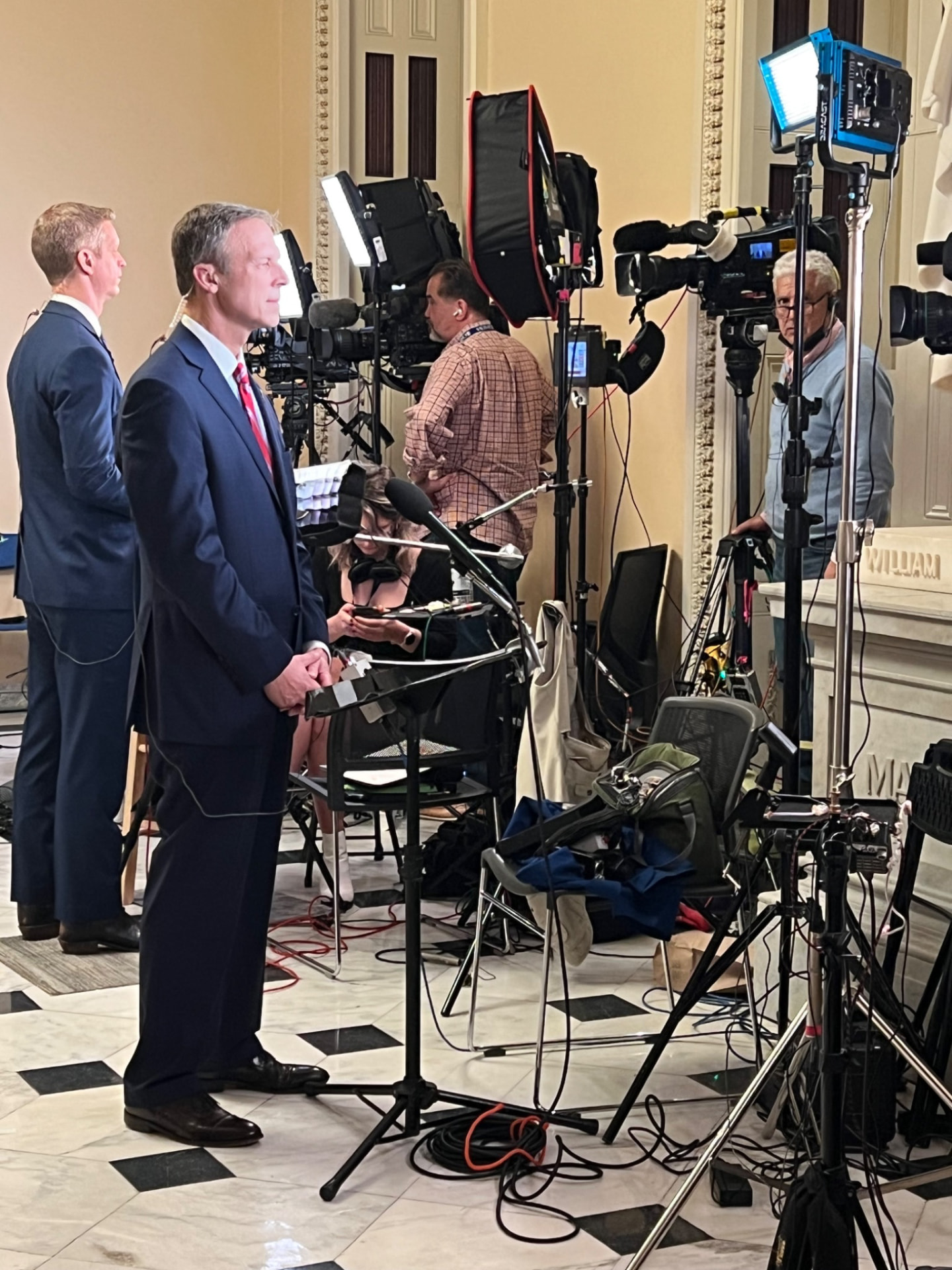
In Pennsylvania’s 10th District, the defeat of Scott Perry is, for me, personal as well as political. Scott is a friend. We have disagreed — on tactics, on tone and at times on substance — and I have never pretended otherwise. But friendship has never required agreement, and respect has never required silence about difference.
His is a record of service that deserves acknowledgement whatever one’s politics. Scott Perry served nearly forty years in uniform, retiring as a brigadier general. As an Army aviator he commanded an aviation battalion in Iraq and flew 44 combat missions. His faith, which I have seen at close quarters, is genuine and central to the man.
None of that settles the political question. His departure removes a prominent conservative voice and a former chairman of the House Freedom Caucus, and it raises questions about the future influence of the movement’s confrontational wing and the balance between ideological commitment and the practical business of securing legislation. Personal respect for the man does not exempt the faction he helped lead from examination — nor should examination of the faction diminish the man.
The defeat of Zach Nunn in Iowa’s 3rd District adds another example of how Democrats reached into constituencies Republicans expected to defend.
The larger question for House Republicans is not simply who will replace defeated members. It is how the party’s factions will respond to losing the majority.
Will the Freedom Caucus and other conservative groups press for a sharper ideological position? Will others argue for a renewed emphasis on economic competence and candidate selection? And can the party reconcile those impulses before the next presidential election?
Those questions will matter well beyond Capitol Hill.
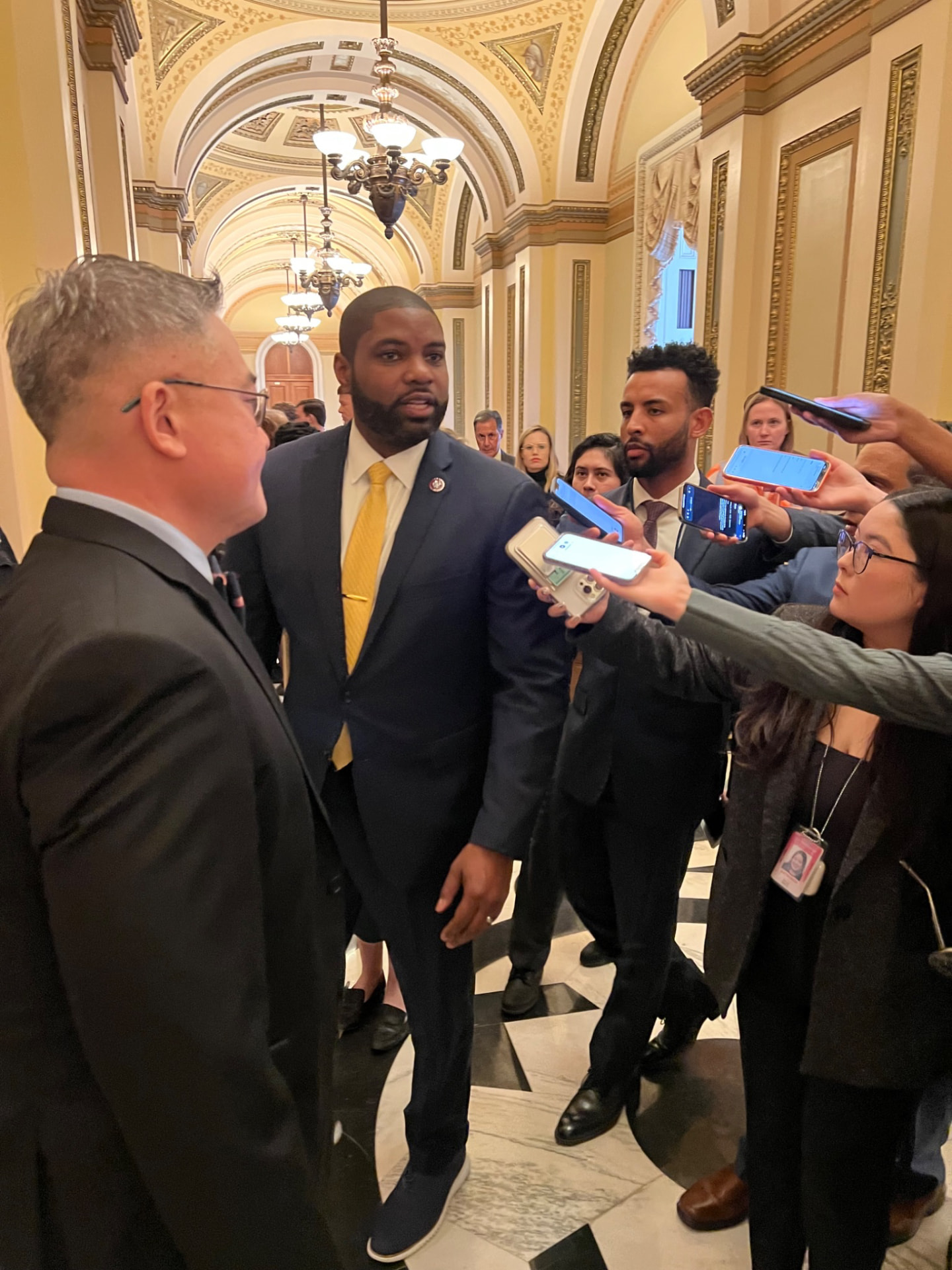
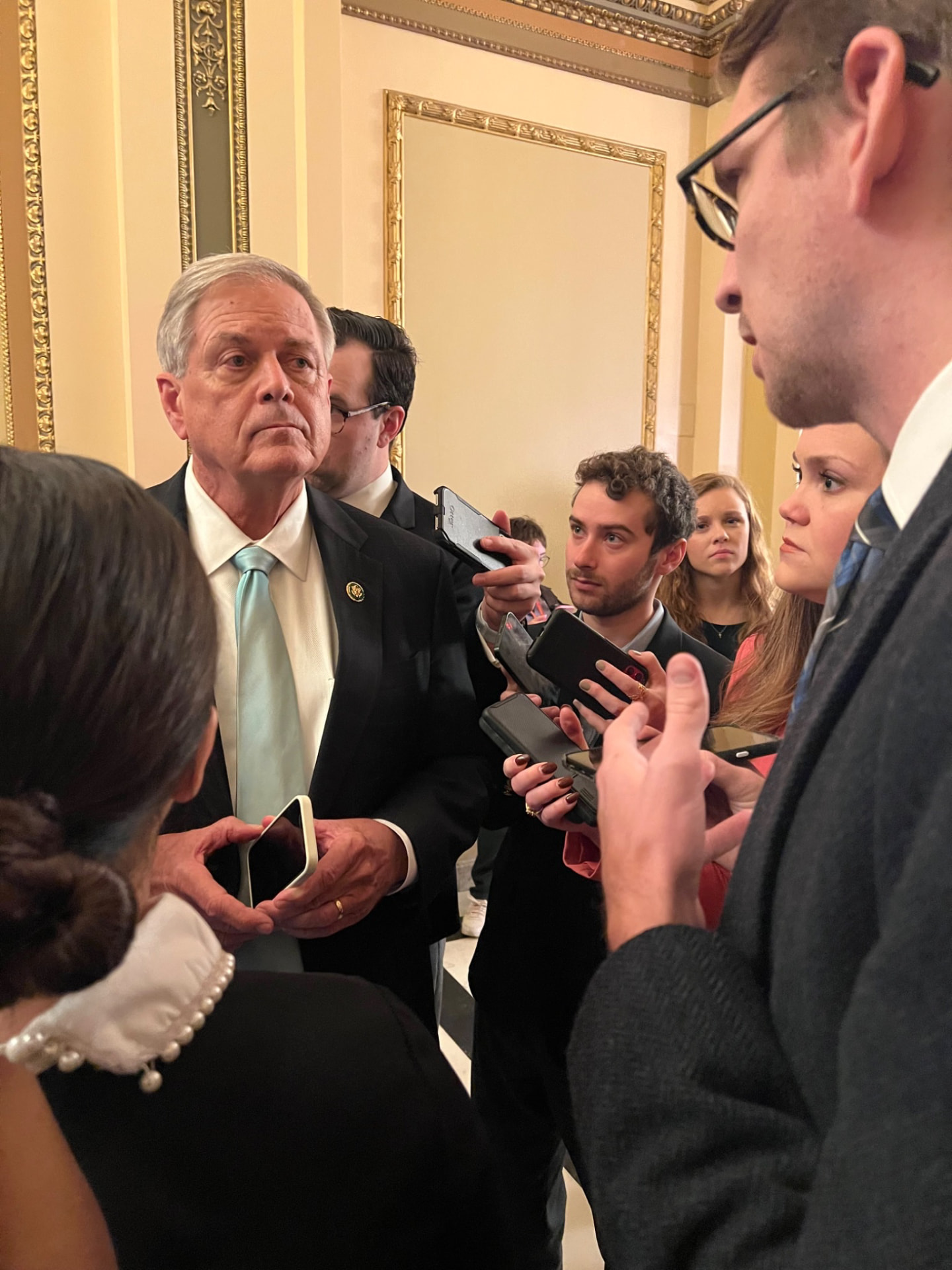
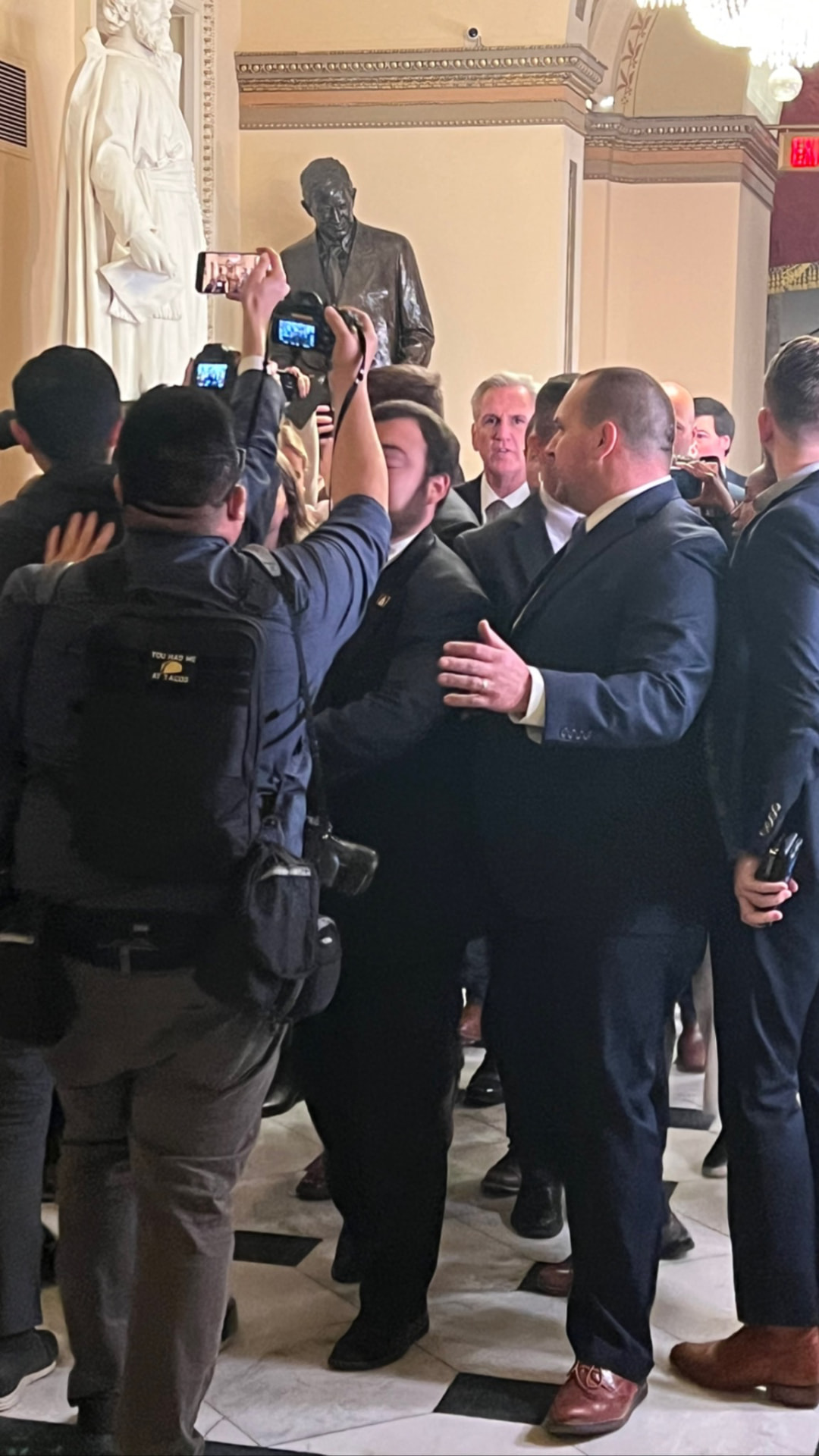
The loss of Scott Perry’s seat in Pennsylvania raises a question larger than the future of one congressman or even the House Freedom Caucus. It brings into focus the divisions within the Republican Party itself.
I have witnessed those divisions at close quarters.
During late-night votes in the House of Representatives, I have spent many hours in the corridors and lobby outside the chamber, watching Republican members argue among themselves while reporters move from one faction to another, seeking explanations for the latest confrontation.
The public sees the roll-call votes, the press conferences and the occasional television confrontation. What it rarely sees is the struggle taking place just beyond the chamber doors: members attempting to persuade colleagues, competing factions questioning one another’s motives, and the party’s leadership trying to hold together a coalition that sometimes seems more willing to fight itself than its political opponents.
There are evenings when the divisions between the Republican right, its more moderate members and those attempting to navigate a middle course become painfully apparent.
The congressional press corps sees it. CNN’s Manu Raju and his colleagues spend long hours following those disagreements. So do the Capitol Police officers and the House officials whose responsibility is to keep the institution functioning safely. Karen and I have witnessed something of that world firsthand.
Some disagreement is inevitable, even desirable. Congress was not designed to be a place where everyone thinks alike. But there is a difference between principled disagreement and a party becoming so consumed by its internal disputes that it struggles to exercise the power entrusted to it.
The electorate has now altered that balance of power.
The question for Republicans is whether losing their congressional majorities will encourage serious reflection on the substance of their policies, the promises made to voters and the way they conduct themselves—or merely open another round of factional warfare.
And Democrats should resist the temptation to imagine that these difficulties belong exclusively to their opponents. Political majorities are difficult to win, harder to manage and remarkably easy to squander.
Democratic control of Congress gives the opposition new authority to investigate the Administration, issue subpoenas, examine spending and scrutinise the conduct of those exercising executive power.
Proper congressional oversight is not retribution. It is part of the constitutional system. The distinction lies in whether those powers are exercised to establish facts and protect the public interest, or to prolong political warfare.
Democrats will understandably want answers on the war, federal spending, executive decisions and the conduct of government. Republicans will warn against partisan investigations. Both parties should remember that the standard they apply to their opponents will eventually be applied to themselves.
There is also the business of governing.
The new congressional majority cannot simply legislate around President Trump. The President retains his veto, while the Senate’s rules and the constitutional division of powers impose further limits. Nor can the White House responsibly treat executive orders as a substitute for enduring legislation on every contested question.
The next two years therefore present a choice.
Congress can make the country almost impossible to govern, each side blaming the other for the resulting paralysis. Or its leaders can identify areas where agreement is both possible and necessary: fiscal restraint, domestic energy, industrial investment, infrastructure, national security and the affordability of everyday life.
Compromise need not mean abandoning conviction. Sometimes it means taking responsibility for getting something done.
Election nights produce winners, losers and an endless supply of confident explanations. But the most important message of this election may be found far from the television studios and campaign headquarters.
It is heard in the farming communities of Kansas and Iowa, the factories of Michigan and Ohio, the towns of Pennsylvania, and households across the Carolinas, Texas and the rest of the country.
Americans are not all asking for the same policies. They do, however, expect the people they elect to understand what their lives cost, what their work requires and what promises have been made to them.
The electorate has changed the balance of power. It has not, by doing so, solved the problems that led it to the polls.
The Age of Discontent has reached Washington. The question now is whether those entrusted with power will listen—or merely begin another argument.
Results reported on 4 November 2026 are AP race calls or reported concessions; none is yet certified. Analysis is the publication’s own.
Archive: Our House and Senate Races to Watch cards were published on 3 November 2026, before the polls closed, and are kept unchanged. US Letter · A4
III · Diplomatique™ Intelligence
The People Behind the Power
Power has names, offices and responsibilities. But understanding who holds a position is only the beginning. We also need to understand the decisions they make, the institutions in which they operate and the relationships through which influence is exercised.
With No. IV, we open our British files alongside the American collections first introduced in No. I. The Power List™ is a growing reference library, designed to be consulted between editions and updated as governments, legislatures and international institutions change.
Browse the public directory of officeholders. Intelligence subscribers can open the detailed dossiers, including documented policy positions, decisions, responsibilities and source records.
Explore The Power List™ LibraryIV · The Kingdom

What is Britain for?
On the fifth of November, the memory of Guy Fawkes offers an irresistible opening to any conversation about Parliament. But the questions confronting Westminster today are not about the destruction of its institutions. They concern whether those institutions can deliver the growth, homes, energy and security that the public has been promised.
Prime Minister Andy Burnham has been in Downing Street for little more than three months. Already, differences within his government suggest that even those charged with delivering its programme are not entirely agreed about Britain's future direction.
The word running through this edition is discontent. Americans expressed it at the ballot box this week. In Britain it appears in the cost of living, in the frustration of businesses struggling to invest and, on some questions, in the conflicting expectations of senior ministers.
Burnham has opened the door to discussing Britain's longer-term relationship with the European Union, including eventual membership. Chancellor John Healey has said he does not expect to see re-entry in his lifetime. HM Treasury officials sought to walk back the remark as humour; the words nonetheless exposed a difference between the men's publicly expressed expectations.
The debate runs beyond two individuals. David Lammy has raised the potential economic benefits of a customs union; Wes Streeting has been linked in reporting to sympathy for closer trade arrangements; and Nick Thomas-Symonds has argued that selectively aligning with European rules can itself be an exercise of sovereignty. Their personal remarks and reported positions must not be confused with settled Cabinet policy. The government continues to rule out rejoining the EU, Single Market or Customs Union, and restoring full freedom of movement, during this Parliament.
For businesses, however, the cumulative effect of arrangements on standards, customs, mobility and oversight matters as much as their political labels.
Is Britain seeking a better settlement outside the Union, or laying foundations for a longer journey towards reintegration?
The proper answer requires clarity from ministers and scrutiny by Parliament—not speculation about private motives.
There is discontent on more immediately measurable matters. Healey must reconcile the Prime Minister's growth ambitions with the pressures of borrowing, taxation and public spending. Defence Secretary Wes Streeting faces demands for higher military expenditure. At housing, Angela Rayner's programme is central to the government's economic strategy, yet recent forecasts suggest fewer net additional homes this Parliament than were delivered during the previous one, even with its Covid disruption. Forecasts are not finished buildings, but an economy cannot grow on housing targets alone.
Energy exposes the most consequential collision between ambition and delivery.
Foreign Secretary Ed Miliband helped shape Labour's earlier clean-energy programme. Energy Secretary Miatta Fahnbulleh must now reconcile that inheritance with jobs, investment, security of supply and Britain's continuing dependence on hydrocarbons.
On 21 October, the North Sea Transition Authority granted production consent for Jackdaw following the Energy Secretary's agreement. The project is expected to increase domestic gas production by roughly six per cent at peak output.
Rosebank, the proposed oil development northwest of Shetland, is the next test. Its application remains in the regulatory process following legal challenges concerning the assessment of emissions. A decision is awaited; ministers have expressly said there is no fixed official timetable. Supporters argue for investment, employment and revenue; opponents point to the climate consequences of a major new oil development. Unlike Jackdaw's gas, Rosebank's oil would largely enter international markets.
On 4 November the government introduced its Energy Independence Bill, proposing to end new licences to explore previously unlicensed North Sea fields while allowing limited additional production from already explored areas and existing infrastructure. Ministers call it a pragmatic transition. Industry and some critics question what it means for investment and skilled employment.
President Trump has repeatedly encouraged Britain to “drill, baby, drill”, a position broadly echoed by Nigel Farage and others who favour further development of the North Sea. Their approach stands in marked contrast to the government's decision to close the door on new exploration licences.
The government's argument is that the North Sea is a mature basin, that new discoveries would take years to reach production and that continued dependence on fossil fuels conflicts with Britain's climate commitments. Existing fields will continue producing, with limited extensions permitted. Critics, however, question the wisdom of removing the option to explore further when Britain will continue consuming oil and gas for decades.
The issue extends well beyond drilling. Britain's considerable offshore wind resources offer opportunities for domestic power generation, but building turbines is not the same as delivering affordable electricity to homes and factories. Renewable developments benefit from government-backed price arrangements, while the transmission network requires enormous investment. Grid congestion already means that wind farms can be paid to reduce output when the network cannot carry their electricity to consumers. These costs, together with those of storage, backup generation and network expansion, belong in any serious calculation of the price of energy.
Nor can Britain afford to overlook nuclear power. France has demonstrated what a substantial nuclear fleet can contribute to a country's electricity supply, although its programme also carries significant construction, maintenance and financing costs. Britain, by contrast, must replace ageing nuclear capacity while developing new reactors and maintaining a dependable supply through the transition.
The question is not whether Britain should develop cleaner energy. It is whether Britain can deliver an affordable, secure and competitive energy system while restricting future domestic production before the alternatives—and the infrastructure to support them—are fully in place.
That is the test of energy independence: not the ambition contained in a Bill's title, but what the country can produce, deliver and afford.
Whatever the merits of individual consents, the government's task is larger: provide affordable, reliable energy without dismantling the industrial capacity on which the transition itself depends.
What Britain has. What Britain pays. What Britain cannot afford to waste.
The North Sea Transition Authority estimates 2.5 billion barrels of oil equivalent in proven and probable UK Continental Shelf reserves and 6.5 billion in contingent resources. Those are different categories: contingent resources are not commercially proven reserves. They nevertheless point to a continuing base of infrastructure and expertise.
Britain's industrial electricity prices expose a much larger problem. In the second half of 2025, large British industrial users paid an average 23.37 pence per kilowatt-hour—more than twice the European median of 11.39 pence. American industry paid roughly 6.30 pence per kilowatt-hour on average in 2025. The comparison is indicative rather than strictly like-for-like: the British and European figures cover large industrial users in the 20,000–69,999 MWh band for the second half of 2025, while the American figure is the 2025 annual national average across all industrial customers.
How can Britain compete in manufacturing, build the computing power and AI infrastructure of tomorrow, or sustain the smaller enterprising businesses that supply them, when electricity costs so much more?
And why should Britain's brightest young engineers, scientists and technology entrepreneurs build their futures at home if the conditions for turning their ideas into businesses are more favourable elsewhere?
This is no longer simply an argument about energy policy. It is an argument about whether Britain intends to remain an industrial and technological power.
At the same time, more than 10 terawatt-hours of renewable generation were curtailed in Great Britain during 2025, chiefly because network constraints prevented power from reaching demand. The problem is not simply how to generate electricity, but how to transmit, store and price it.
The industrial question therefore cuts across established political camps. Can Britain make use of its offshore engineering, ports, grid investment and skilled workforce while delivering energy at prices that allow factories, shipyards and advanced industries to compete?
Here geography becomes opportunity. The British and Irish Isles sit within an Atlantic network of ports, energy facilities, shipyards, cables and trade routes. Aberdeen's offshore expertise, Rosyth's naval engineering and Belfast's maritime and manufacturing capabilities are not isolated local assets. Their future is linked to the Irish Sea, the North Sea, continental Europe and the North Atlantic.
The same network extends to allied yards and industrial centres in the United States and Canada. Modular shipbuilding, offshore engineering, subsea infrastructure and port investment offer areas where practical cooperation can support economic growth and maritime security.
The Atlantic Archipelago is not a proposed constitutional settlement. It is a proposition about making better use of existing geography and industrial capacity across political borders. Britain's industrial future will not be secured by plans that look persuasive in Whitehall but cannot be implemented competitively in Aberdeen, Rosyth, Belfast or the manufacturing towns of England and Wales.
Nor should commercial cooperation require unanimity about Brexit, the constitutional futures of Scotland or Northern Ireland, or the relationship between Britain and the Republic of Ireland. Ports can cooperate and companies can invest even where political identities differ.
The Winter of Discontent of 1978–79 was shaped by circumstances different from those of 2026. Yet its lasting lesson is that citizens judge governments not by the elegance of their plans but by the services, homes, jobs and prospects those plans deliver.
Can families afford to heat their homes? Can businesses afford electricity? Can young people find somewhere to live? Can the country equip its armed forces and finance the commitments it makes?
A country does not have to be on the brink of revolution for sustained discontent to alter its political direction.
An Age of Discontent is not necessarily an Age of Revolution. The distinction matters.
V · Europe
Discontent is not an American or British condition. Across Europe it has taken to the streets, entered ballot boxes and reached the councils of government. But an Age of Discontent is not necessarily an Age of Revolution, and it would be a mistake to describe these movements as one revolt. The grievances differ, and so do the threats.
In France, students and workers have protested the cost of living, schools and public services; Italy has witnessed demonstrations over wages, jobs, housing and the price of everyday life. A protest over school funding should not be confused with one over military spending or migration.
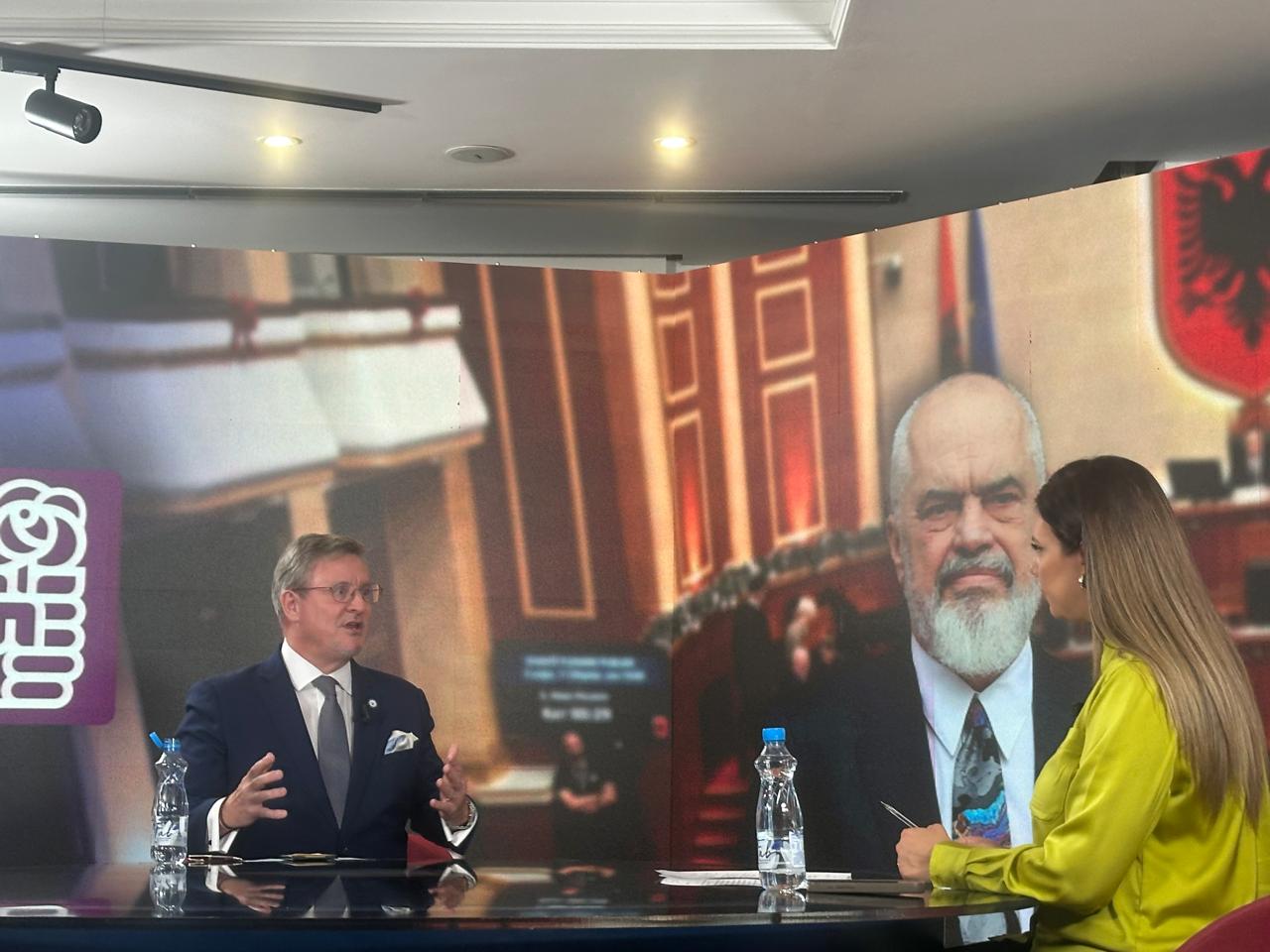
In Albania the dispute is over corruption, justice and the conduct of power, and it has filled the streets of the capital for a hundred days. I discussed these events on Albanian television in Tirana. Violence by anyone, demonstrator or officer, should be condemned. Claims that provocateurs were organised to discredit the protests, and accounts of a church fire, remain claims until they are independently verified.



There is another reason why these scenes trouble me. During the Troubles in Northern Ireland, and later in its difficult passage through peacebuilding, I was involved in attempts to head off civil disorder, bring rioting to an end and broker local understandings between neighbours and security forces. I learned how quickly a single confrontation—or an incomplete story repeated through the media—can harden fear into anger. I recognise echoes of that experience in Tirana, though the circumstances are not identical.
Congressional concern is now more than a television message. In an October 22 letter, Congressmen Joe Wilson and Keith Self asked Secretary Rubio to examine allegations of significant corruption, support Albania's independent justice institutions and address policing and journalists' safety, requesting a reply by November 5. Their intervention is a clear record of what they asked Washington to examine; it is not proof of every allegation circulating on the streets.
The lesson from Northern Ireland is not that discontent inevitably becomes revolution. It is that the response of authorities, the restraint of demonstrators and the willingness of trusted interlocutors to listen can determine whether protest opens a path to reform or hardens into division. If my experience can be of service to Albanians seeking a peaceful way forward, I would consider that both a privilege and a responsibility.

Across the Nordic and Baltic region, discontent is inseparable from security. Russia's war against Ukraine has made borders, communications, energy infrastructure and maritime approaches an immediate concern. Latvia's October election gave the United List 41 of the Saeima's 100 seats—a strong result, but not a majority, leaving coalition-making necessary. In September and October approximately 12,000 Latvian and allied personnel took part in the Namejs national defence exercise. That was not protest; it was an answer to a very different insecurity.

Further south, the Western Balkans carry their own burdens: governance and corruption, unresolved constitutional questions and migration corridors linking the Middle East, Asia and Africa with the European Union. Migration is one pressure among several, not an explanation for every dispute in Belgrade, Tirana or Sarajevo.
America's discontent has just been expressed through ballots in its 50 states. Elsewhere the same word describes something very different: an unanswered grievance, a dispute over democratic institutions, or fear that a neighbouring war may spread. An Age of Discontent is not a single revolutionary movement. That is precisely why we must understand the distinct causes and resist the temptation to force them into one explanation.
One point of convergence demands attention: the systems through which people receive information and nations conduct their affairs. Governments and platforms can restrict or shape discussion; hostile actors can disrupt networks; damaged cables and threats to satellites can impede data. These are different phenomena, not to be lazily conflated, but each reminds us that modern societies depend upon connections that can be constrained or severed. We will return to the Baltic and Black Seas and the Danish Straits—the strategic nodes of Where the World Narrows™.
On the runway: the northern and eastern European security frontier; Russia and Ukraine; the Western Balkans; strategic maritime chokepoints; and the resilience of communications, energy and trade.
VI · The Diplomatique City
Washington has long presented itself as the capital of the free world, the shining city on a hill to which nations have looked for leadership, security and opportunity. Yet the city's diplomatic reputation has become somewhat tarnished in the eyes of some of America's oldest allies. President Trump's transactional approach to foreign policy, his preference for the art of the deal over the familiar courtesies of diplomacy, has changed the character of international engagement. Foreign leaders still come to Washington because they must. Increasingly, however, the pilgrimage can appear less an exercise in traditional diplomacy than an audience with the President, where visitors are expected to pay homage—or, dare we say, kiss the proverbial ring. The extraordinary public confrontation with President Volodymyr Zelensky in the Oval Office demonstrated how quickly diplomatic protocol can give way to forthright disagreement before the world's cameras. Whether the American electorate's latest expression of discontent will change that approach remains to be seen.
But Washington is much more than 1600 Pennsylvania Avenue. The fleeting presidential audience, whether accompanied by tea or not, may command the headlines; the substantive work of negotiation frequently takes place elsewhere, in the great departments of government and among the Cabinet secretaries and their armies of officials who turn presidential declarations into agreements, regulations, investments and enforceable commitments. Just east of the White House, at 1500 Pennsylvania Avenue, Secretary Scott Bessent presides over the United States Treasury. His influence extends far beyond the management of America's finances. International capital markets, sanctions, currency policy, sovereign debt and foreign investment are instruments through which Washington exercises power. Along Constitution Avenue, the monumental Herbert C. Hoover Building houses the Department of Commerce, where Secretary Howard Lutnick plays a central role in trade negotiations, tariffs and industrial investment. For foreign governments and international businesses seeking enduring agreements with the United States, these conversations may matter more than the photographs taken in the Oval Office.
The Power List™ — Intelligence Cards on the people who hold these offices, for subscribers
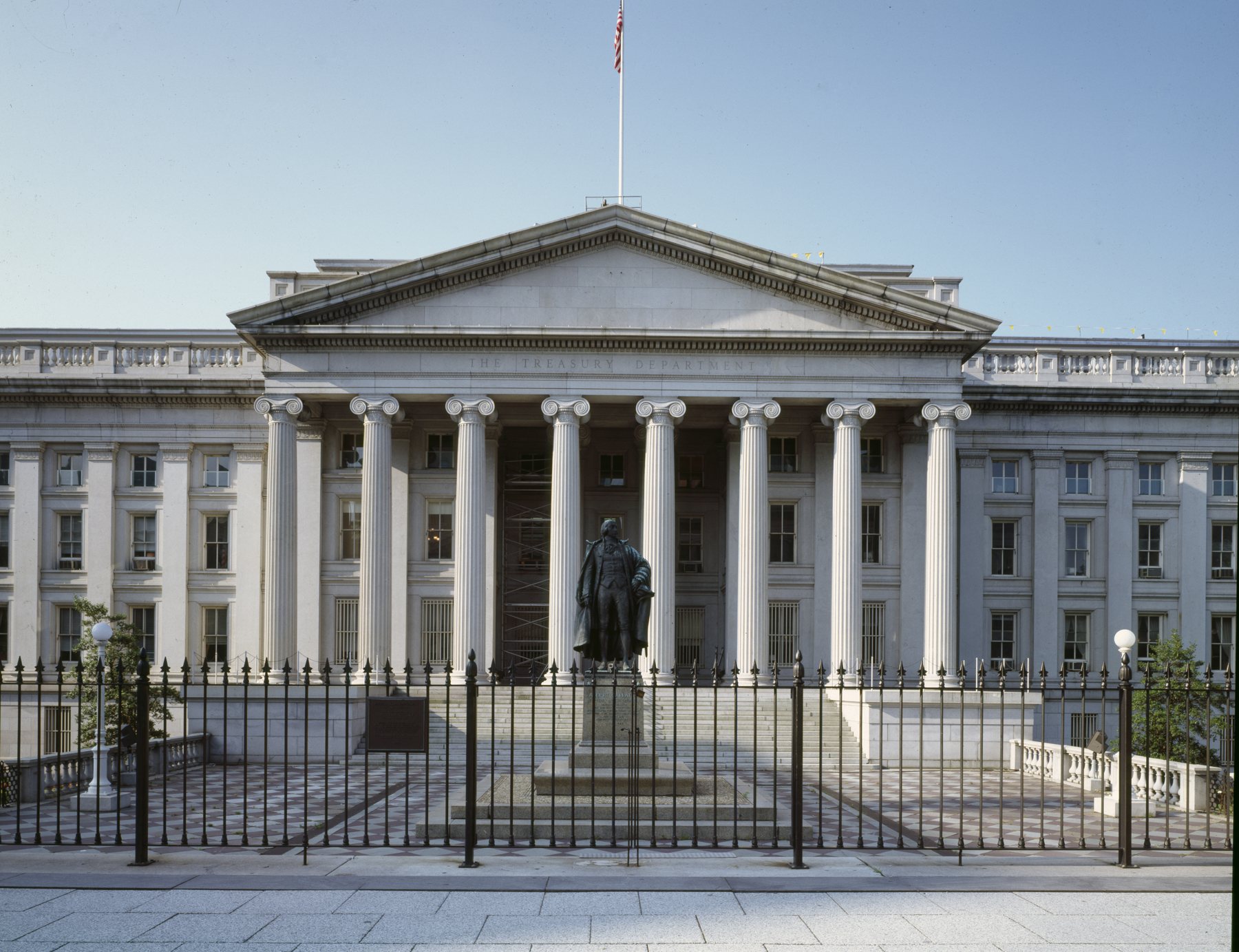
Nearby stands the magnificent Andrew W. Mellon Auditorium, where twelve nations signed the North Atlantic Treaty in 1949. Its name provides a remarkable transatlantic connection. Andrew W. Mellon served as Secretary of the Treasury under Presidents Harding, Coolidge and Hoover, occupying the very office now held by Scott Bessent. His father, Judge Thomas Mellon, was born in 1813 near Omagh, County Tyrone, emigrating to America at the age of five. The family's original homestead survives at the Ulster American Folk Park, tracing a journey from rural Ulster to the commanding heights of American banking, industry and government. There is something especially fitting about that family history being commemorated in a building where the Atlantic alliance was founded. The auditorium continues to host major gatherings while work proceeds on President Trump's proposed White House ballroom, intended to provide a new setting for state occasions.
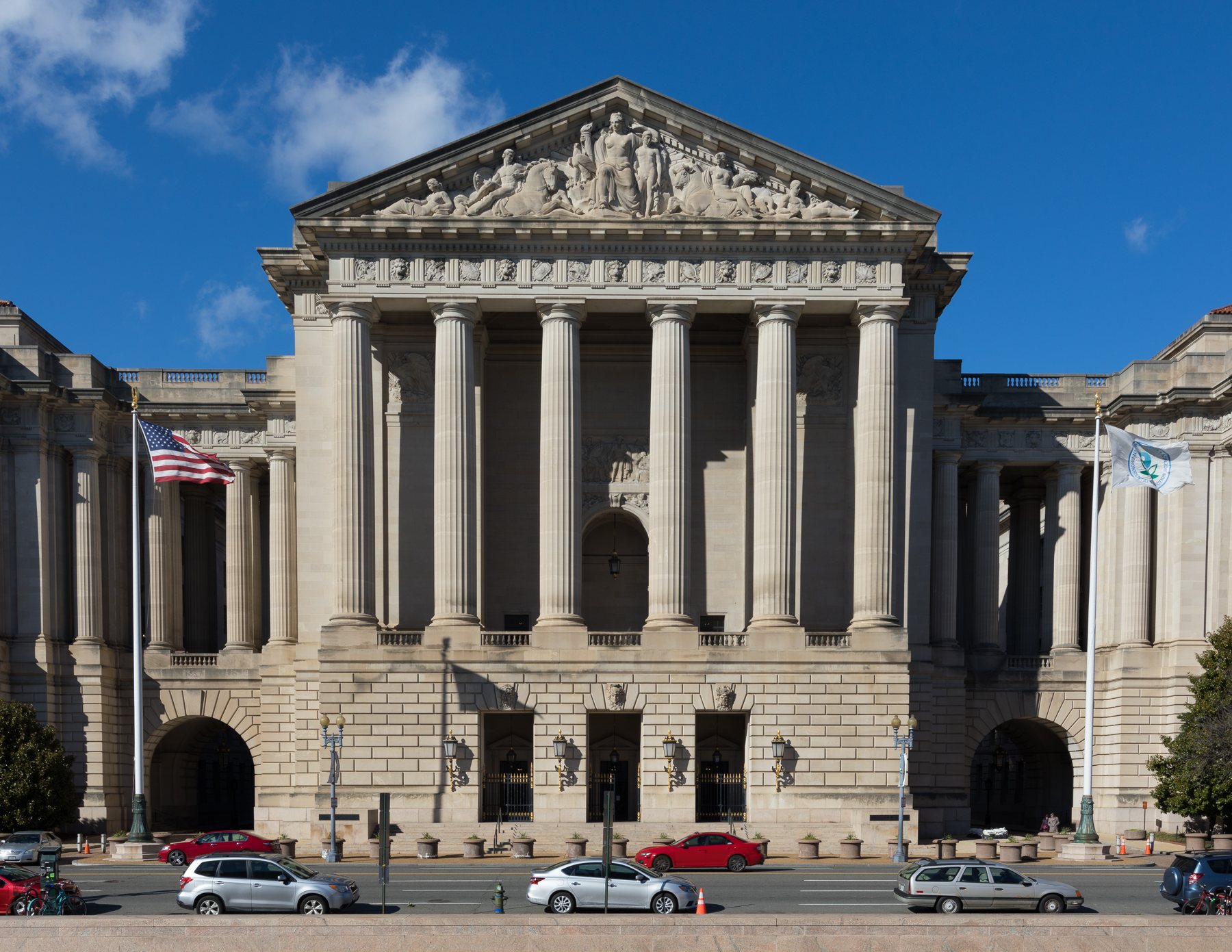
Further along Pennsylvania Avenue, the Ronald Reagan Building and International Trade Center has welcomed countless international delegations and business leaders. It was also home to USAID, once an important destination for those seeking American development assistance and humanitarian partnerships. Its dismantling and the transfer of selected functions to the Department of State have changed that landscape considerably. Across the National Mall, Secretary Chris Wright leads the Department of Energy from the James V. Forrestal Building on Independence Avenue. Its responsibilities extend from energy production and security to nuclear technology, scientific research and industrial competitiveness. The White House and the Department have repeated the mantra that “energy security is national security” with almost liturgical regularity. Yet the proposition deserves attention: the security of a nation increasingly depends not only on its armed forces, but on its ability to generate, transport and afford the energy required to sustain its economy, industry and defence. And no account of Washington's diplomatic architecture would be complete without the Harry S. Truman Building in Foggy Bottom, where Secretary Marco Rubio leads the Department of State, supported by America's worldwide diplomatic network. The Secretary and his officials remain central to negotiations, alliances and the long work of maintaining relationships that cannot be settled in a single presidential encounter.
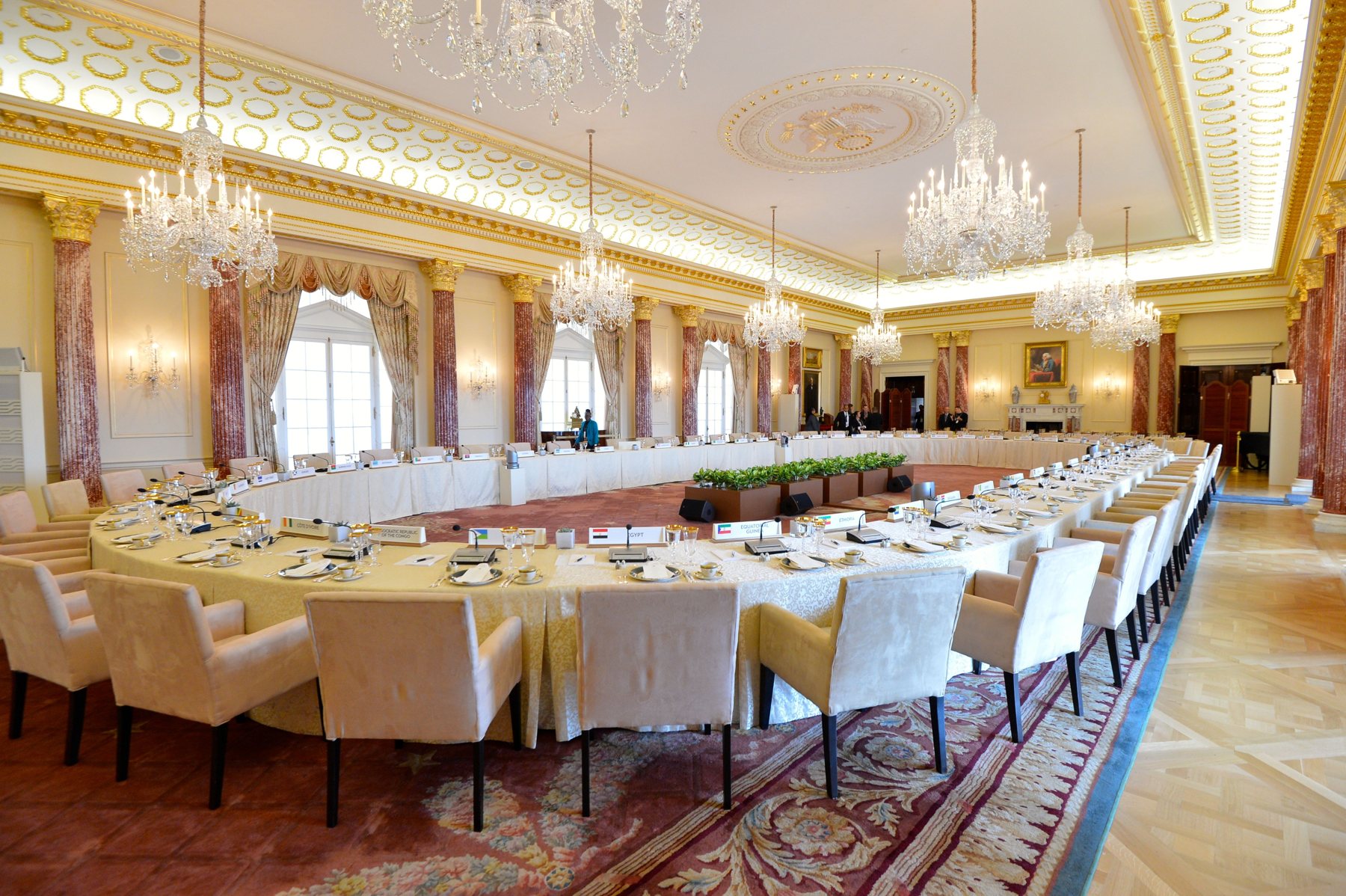
Yet buildings, however imposing, are not diplomacy. People are.
Yet buildings, however imposing, are not diplomacy. People are. Washington's enduring influence rests not only in the offices of its Cabinet secretaries but in the thousands of officials, diplomats, legislators, advisers and business leaders who sustain relationships and undertake the patient work that consequential agreements require. Much of that work takes place beyond the formal meeting rooms: over coffee, across luncheon tables, or in conversations that continue long after an official appointment has concluded. The capital possesses a collection of restaurants, bars and gathering places that have become institutions in their own right—where people meet, occasionally disagree, and sometimes discover common ground. Which brings us to another of Washington's enduring arts: hospitality.
VII · Quintessentially Diplomatique™
From discreet cocktails to consequential conversations — seven Washington institutions where the capital's business is conducted beyond the corridors of power.
“An empty stomach is not a good political advisor.” The words have long appeared at The Monocle, across from the Senate offices — a fine reminder that in Washington, conversation, hospitality and the exercise of power are seldom entirely separate. Diplomatique™ follows the tables and bars where relationships are built away from hearings, briefing rooms and formal receptions.

Photograph: Mark J. Finlay · Diplomatique™ archive
01 · The Hay-Adams
Below the Hay-Adams facing Lafayette Square, deep red banquettes, political caricatures and impeccably poured cocktails make discretion part of the décor. The celebrated hotel bar calls itself the place to be seen, but not heard.

Photograph: Mark J. Finlay · Diplomatique™ archive
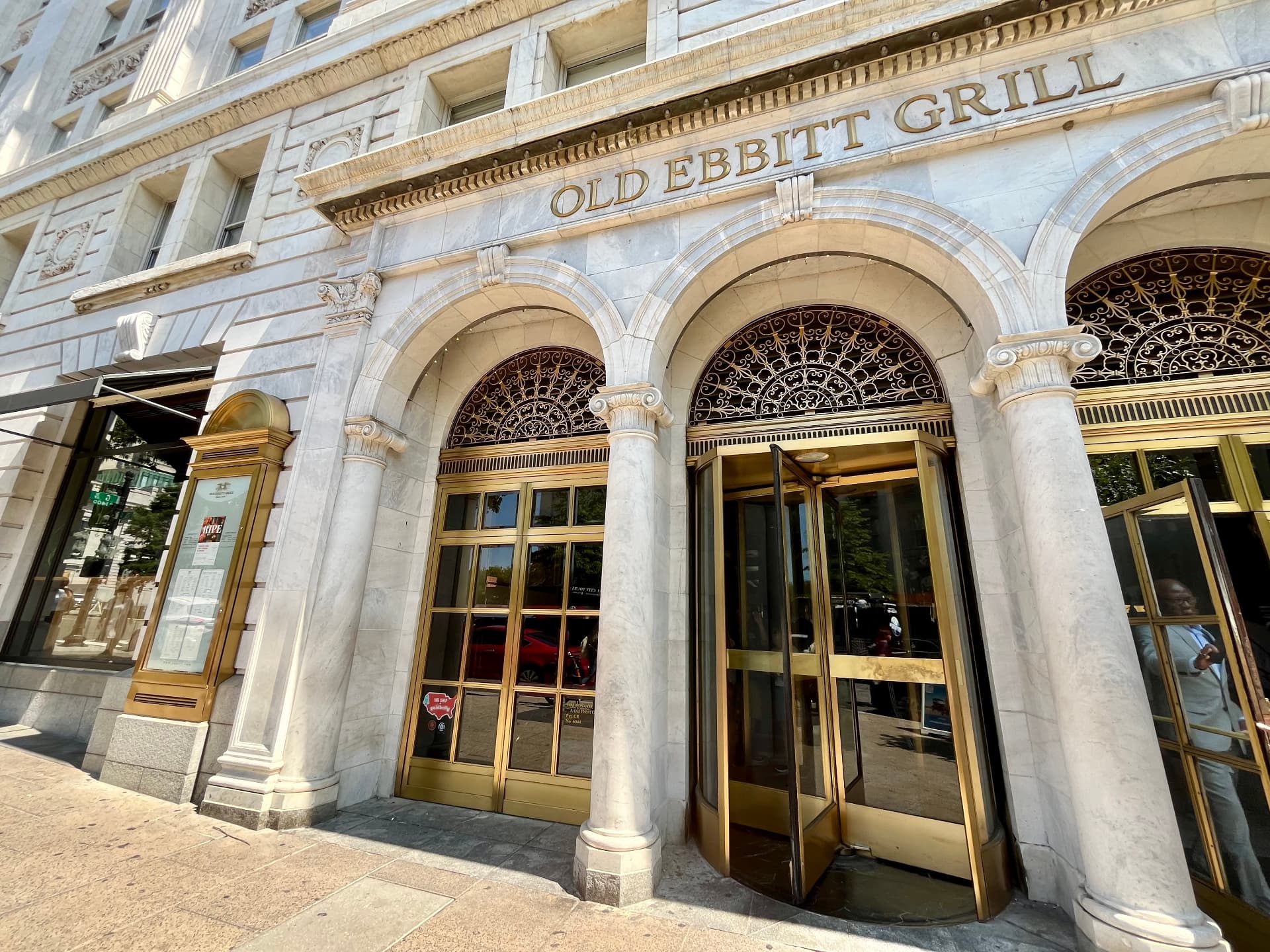
02 · 15th Street
Washington’s oldest saloon traces its beginnings to 1856. Across from the Treasury, Victorian rooms and a bustling oyster bar bring together visitors and the capital's seasoned regulars.

Photograph of Karen Finlay, Kelly Ann Conway and Mark J. Finlay
03 · Georgetown · A detour
Amalfi Coast-born Franco Nuschese opened this Georgetown Italian dining room in 1992, and made hospitality an art of Washington diplomacy. It remains a place for good Italian cooking and for recognising familiar faces across the room.

Diplomatique™ archive
04 · Capitol Hill
Connie and Helen Valanos opened The Monocle in 1960 beside the Senate offices; the family tradition continues. Steak, seafood and walls of Washington photographs have accompanied generations of congressional conversations.


From the studio lights to Capitol Hill. Fresh from a live broadcast of the GB News Late Late Show, the conversation continued over refreshments at Butterworth’s, Washington, D.C., in the company of friends and guests, including former British Prime Minister Liz Truss.
Left: Mary Ellen Swenson, Mark J. Finlay and Greg Swenson.
Right: Mark J. Finlay with former UK Prime Minister Liz Truss.
Butterworth’s, Capitol Hill · Diplomatique™ Archive
05 · Capitol Hill
A younger establishment with the air of an old European salon, on Pennsylvania Avenue SE. Chef-partner Bart Hutchins offers a market-led changing menu, coffee by day and candlelit dining as the Hill winds down.



Photograph: Mark J. Finlay · Diplomatique™ archive
06 · F Street · A detour
Shelly’s offers the capital's cigar connoisseurs a clubby retreat with well-stocked humidors, bourbons and single malts. But it is no mere stogie-and-whiskey stop: lunch, dinner and substantial late-night food give non-cigar-minded companions reasons to linger.




Photograph: Mark J. Finlay · Diplomatique™ archive
07 · 14th Street
Stephen Starr's lively Parisian brasserie serves steak frites, escargots and onion soup amid the happy bustle of 14th Street. One of Diplomatique’s favourite places for the kind of long lunch that tends to outlast its original agenda.
VIII · The Q List™

Numbers Behind an Age of Discontent
94 years
First Democratic US Senate win in Kansas since 1932.
Adam Hamilton (D) defeated Roger Marshall (R) — Kansas’s first Democratic victory in a US Senate election since 1932.
38 years
First Democratic US Senator from Texas since 1988.
James Talarico (D) defeated Ken Paxton (R), the first Democrat elected US Senator from Texas since Lloyd Bentsen in 1988.
1st Muslim US senator
Abdul El-Sayed won Michigan’s Senate contest against Mike Rogers.
AP called Michigan’s open Senate seat for Abdul El-Sayed (D) over Mike Rogers (R) on 4 November 2026. NPR and The Detroit News report he will be the first Muslim elected to the US Senate.
No margin is stated: the count was incomplete at the call.
AP · NPR · Detroit News
100.03% of GDP
Debt held by the public reached 100.03% of FY2026 GDP.
Federal debt held by the public reached $32.2 trillion, 100.03% of FY2026 GDP — the first fiscal-year-end reading at that level since 1946.
Debt held by the public, not annual debt-service cost. Quarterly data had already passed 100% in March 2026.
8.5 points
President Trump carried the district in 2024; Paige Cognetti won it back for the Democrats in 2026.
President Trump carried Pennsylvania’s 8th District by 8.5 points in 2024, yet Democrat Paige Cognetti defeated the incumbent, Rob Bresnahan, in 2026. In 2024 Bresnahan won the House seat 50.81% to 49.19%.
Prior Republican presidential margin, not a calculated swing.
$737,375 cost rise
One Kansas family’s reported operating costs, 2025 to 2026.
One Kansas family’s reported farm operating costs rose by $737,375 from 2025 to 2026, including $514,625 for fertiliser and $187,000 for diesel.
A single family’s example, not a national average; not every cost is attributable to tariffs or war.
311–310 votes
Prime Minister James Callaghan’s government fell by a single vote of no confidence on 28 March 1979, following Britain’s Winter of Discontent—triggering an election that ushered in more than eleven years of Conservative government under Margaret Thatcher.
On 28 March 1979 the Commons passed a motion of no confidence in James Callaghan’s government by one vote, forcing the election that brought Margaret Thatcher to power.
41/100 seats
United List’s share of the Saeima, final result.
United List won 41 of the Saeima’s 100 seats in the final 2026 result (not the preliminary 42).
≈3,000 personnel
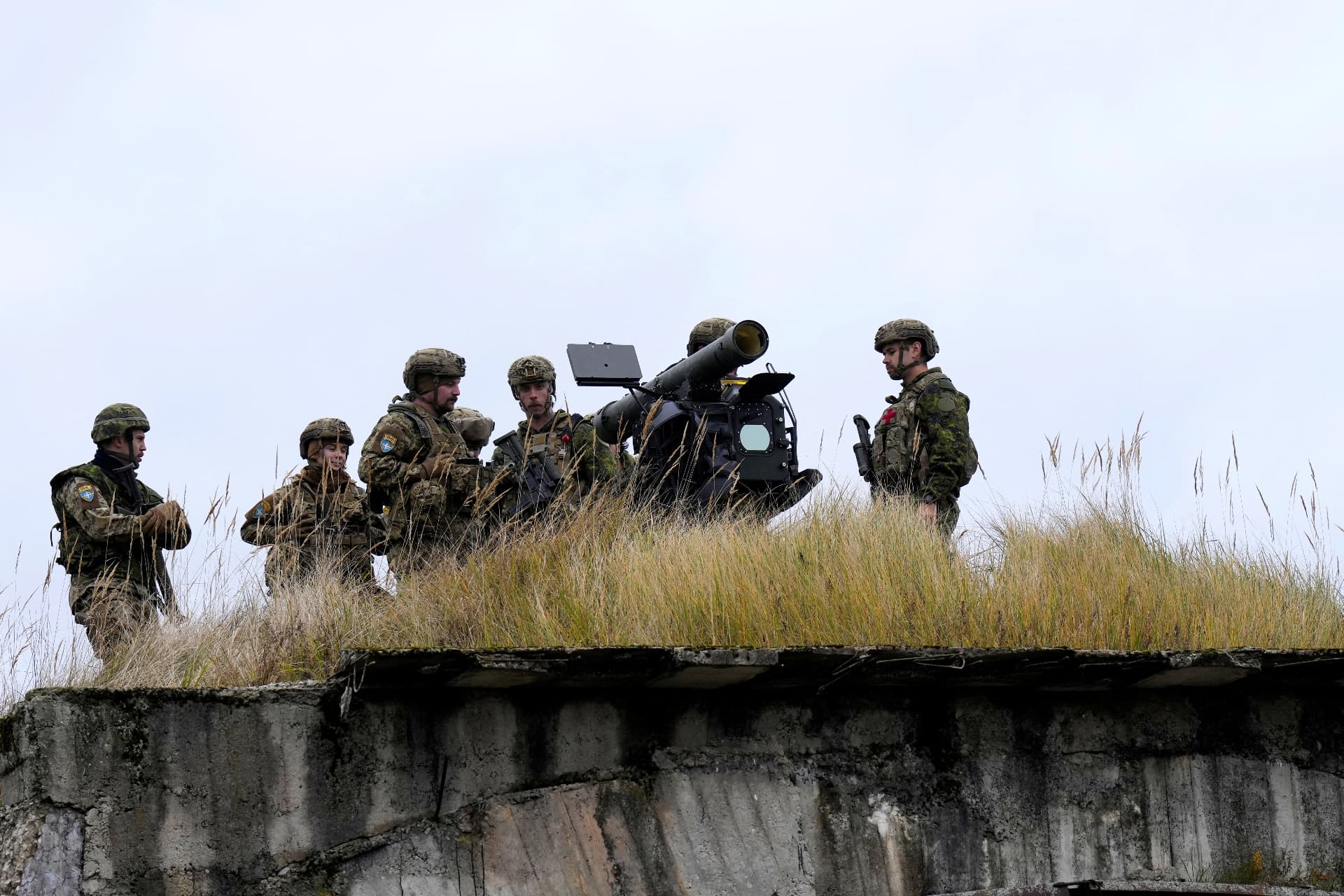
Tactical exercises currently taking place across Latvia, 26 October–8 November, with roughly 1,000 military vehicles deploying towards the east.
Resolute Reforger 2026, currently taking place as of 5 November and scheduled to end on 8 November, is a NATO training exercise, not a combat operation. Units of the Canadian-led NATO Multinational Brigade move from Ādaži and Ceri and disperse into eastern Latvia, rehearsing long-distance deployment, supply, communications and command readiness, including in areas near the Russian and Belarusian borders. Latvian defence authorities report approximately 3,000 personnel and 1,000 vehicles. Return and restoration movements began on 4 November.
Published figures are approximate exercise plans, not independently audited counts; no fighting is involved. Separate exercise for reference: Namejs 2026 (2 September – 8 October) involved about 12,000 Latvian and allied personnel.
Latvian National Armed Forces, 21 Oct 2026 · Latvian Ministry of Defence · Ministry of Defence · Namejs 2026 (reference)