An Administration chart tells you who holds office. It does not necessarily tell you who holds influence.
That distinction matters particularly in President Trump's second Administration. Formal authority remains important, but power also flows through personal trust, access to the President, control of the machinery of government, and the ability to turn presidential instinct into action.
Scott Bessent has become considerably more than Treasury Secretary. His reach across markets, tariffs, trade and economic strategy suggests a level of presidential confidence extending beyond his departmental brief.
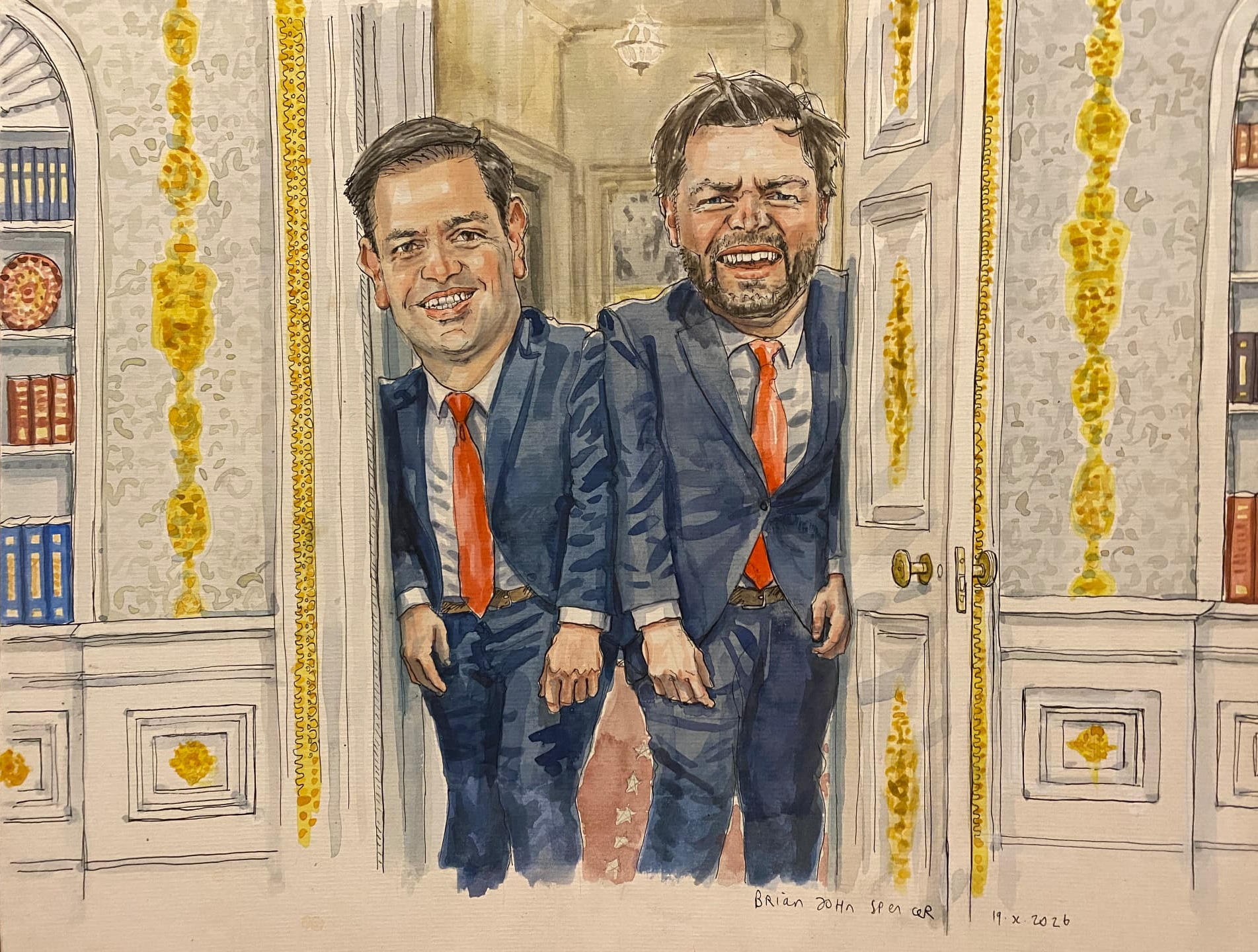
Marco Rubio remains one of the Administration's central foreign-policy figures. Susie Wiles, as White House Chief of Staff, occupies a different kind of power: controlling process, access and the machinery around the President.
Then there is what might be called Trump's envoy diplomacy. Steve Witkoff and Jared Kushner demonstrate why an organizational chart can be misleading. The President has repeatedly entrusted them with some of the most difficult negotiations in the world — from Ukraine and Russia to Iran, Israel and Gaza. Foreign governments have noticed. In some cases, they increasingly seek routes into Trump's trusted circle rather than relying solely upon conventional diplomatic channels.
Stephen Miller exercises another form of influence: translating political philosophy and presidential priorities into government action. Russ Vought, from OMB, possesses something less visible but potentially just as consequential — leverage over the machinery, spending and structure of the federal government.
And JD Vance cannot be understood simply as the Vice President. He has his own political constituency, a close relationship with the President and an increasingly important place in the intellectual and political direction of the movement around him.
Others remain powerful within their portfolios. But Cabinet rank and presidential proximity are not synonymous.

 uintessentially Diplomatique™